2026 Best Double Tape Rubber for Global Buyers?
Choosing the 2026 Best Double Tape Rubber for Global Buyers requires more than comparing prices and adhesive strength. Product reliability depends on rubber formulation, liner quality, surface energy, temperature, and application pressure. A tape that grips painted steel may fail on polyethylene, dusty concrete, or recycled plastics.
Market evidence supports this careful approach. Grand View Research reports continued growth in the global double-sided tape market through 2030, driven by automotive, electronics, packaging, and construction demand. MarketsandMarkets also forecasts steady expansion, especially for high-performance bonding products that reduce mechanical fasteners and assembly time. These reports indicate opportunity, not automatic product quality. Growth does not remove testing risks.
Real conditions matter. A warehouse may reach 45°C, while a refrigerated shipment can fall below freezing. Humidity can weaken exposed edges. A rubber adhesive may offer strong initial tack, yet lose holding power during long-term shear loading. Buyers should request peel adhesion, holding power, temperature resistance, aging, and residue data. ASTM D3330 and ASTM D3654 provide useful reference methods, while ISO-based quality systems can strengthen supplier evaluation.
No single tape wins. That assumption needs testing. Experienced buyers should compare substrates, roll dimensions, release liners, storage conditions, and batch traceability. Suppliers should explain whether performance data comes from laboratory panels or actual production surfaces. This distinction is easy to miss. It matters.
The strongest global sourcing decision balances verified performance, regulatory documentation, packaging protection, and total installed cost. Double Tape Rubber can be highly effective, but only when its construction matches the job. Practical trials remain essential before large-scale purchasing.
What Is Rubber Double-Sided Tape and How Does It Work?
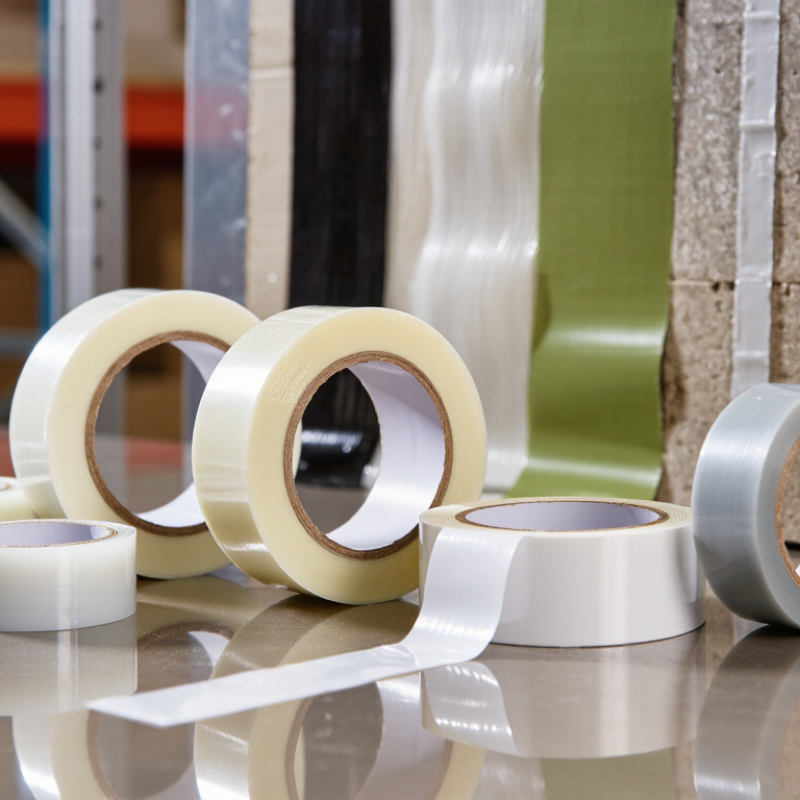
Rubber double-sided tape uses a thin carrier coated with pressure-sensitive rubber adhesive on both sides. A release liner protects the adhesive until installation. When the liner is removed, pressure pushes the adhesive into small surface irregularities. That contact creates grip without water, heat, or curing time. The rubber layer stays slightly flexible, so it can absorb vibration and follow curved parts. This makes it useful for signs, trim, packaging components, and lightweight panels. Not a universal fix.
Performance depends on more than stickiness. Dust, oil, moisture, and low temperatures can reduce contact. For reliable application, buyers should clean the surfaces, let them dry, and apply firm, even pressure. A smooth metal panel may bond quickly, while rough cardboard needs stronger compression and more tape area. In practical assembly checks, a 24-hour dwell period often reveals weak edges or early lifting. Still, this is only a useful reference, not a guarantee. Rubber adhesive can lose strength under continuous heat or heavy shear loads. I have seen teams choose tape by width alone, then blame the product when the substrate flexes. That decision deserves rethinking. Buyers should compare adhesive grade, carrier thickness, temperature range, and expected load with actual samples.
Key Rubber Tape Types and Their Main Applications
2026 Best Double Tape Rubber for Global Buyers?
Double-sided rubber tape is not one universal product.
For global buyers, the adhesive base, carrier, thickness, and service temperature matter more than appearance.
Natural rubber adhesive usually provides strong initial tack on cardboard, wood, painted metal, and many plastics.
Synthetic rubber systems often offer better aging balance and more consistent performance across changing conditions.
Neither type fits every surface.
Foam-backed rubber tape fills small gaps and cushions vibration in signs, panels, trims, and light assemblies.
Thin film-backed tape suits nameplates, labels, protective strips, and clean indoor mounting.
Cloth-backed versions handle rougher handling and can conform to uneven surfaces, although edges may lift under moisture.
For temporary fixtures, choose removable construction only after testing residue and paint compatibility.
Test before scaling.
Application testing should include peel strength, shear holding, heat exposure, humidity, and removal behavior.
A clean, dry surface is essential; dust and plasticizer migration can weaken the bond quickly.
Apply firm pressure with a roller, then allow adequate dwell time before loading the joint.
In practical reviews, buyers sometimes overvalue high tack and overlook long-term creep.
That shortcut can fail.
Even supplier data needs confirmation on the actual substrate, because laboratory panels rarely match production surfaces.
Packaging should also protect the tape from excessive heat and humidity during transit.
How to Compare Adhesion, Durability, and Weather Resistance
2026 Best Double Tape Rubber for Global Buyers?
Choosing rubber double-sided tape is not about strong adhesion alone. A tape can grip cardboard instantly but fail on powder-coated metal. Test the intended surfaces before ordering large quantities. Clean both surfaces, apply firm pressure, and allow enough bonding time. A quick hand test is useful, but it is not reliable evidence.
Compare adhesion through initial tack, peel strength, and shear resistance. Initial tack shows how quickly the tape holds. Peel strength measures removal force at a controlled angle. Shear resistance matters when a sign, trim piece, or cable channel hangs vertically. In practical trials, check the tape after 24 and 72 hours. The result can change.
Weather resistance needs equal attention. Expose samples to heat, cold, moisture, and direct sunlight. Rubber adhesive often performs well on many general-purpose surfaces, but extreme heat may soften it. Low temperatures can reduce flexibility and contact. Check edge lifting after rain simulation. Watch for residue, cracking, or adhesive flow. Small failures become expensive outdoors.
Material pairing also matters. Rough surfaces may require thicker foam or stronger pressure. Smooth plastic can still resist bonding because of surface energy. One overlooked issue is liner removal; rushed installation may create bubbles and weak spots. I have seen promising tape fail because the surface was slightly oily. That mistake is easy to repeat. A controlled test remains more trustworthy than a supplier specification alone.
Choosing the Best Rubber Double Tape for Different Global Markets
2026 Best Double Tape Rubber for Global Buyers?
Choosing the Best Rubber Double Tape for Different Global Markets
Rubber double tape should match the application, not just the purchase price. In my sourcing experience, surface preparation often affects bonding more than tape thickness. Dusty cartons, textured plastics, and painted metal require different adhesive behavior. A tape that grips quickly may still lose strength under long-term pressure.
Climate changes the selection. Tropical markets need resistance to humidity and heat. Cold regions require an adhesive that remains flexible during transport and installation. For indoor signs, moderate peel strength may be enough. Heavy trims may need stronger shear resistance and a thicker foam carrier. Always test the tape on the real substrate.
Small details matter.
Ask suppliers for peel, shear, temperature, and aging data. Request samples from the same production batch when possible. Check liner removal by hand, especially for fast packing lines. In dusty warehouses, exposed adhesive can collect particles quickly. That problem is easy to miss during a short factory trial.
Global buyers should also review packaging, storage life, and technical documents. Clear test conditions make comparisons more reliable across regions. Local installers may reveal issues that laboratory reports cannot show. Their feedback deserves attention.
A perfect tape does not exist. I have seen strong products fail because the surface was oily or poorly cleaned. This is why a controlled trial remains necessary before large orders. Cost, performance, climate, and handling must be judged together for each market.
Buying, Testing, and Storing Rubber Double-Sided Tape in 2026
Choosing the best rubber double-sided tape in 2026 starts with the application, not the catalog label. Buyers should record the surfaces, contact area, expected load, temperature range, and exposure to moisture or dust. A tape that grips painted steel may fail on low-energy plastic. Ask for technical data, lot information, and storage guidance. Reliable suppliers should explain test methods, not only advertise high adhesion.
During evaluation, clean both surfaces with a suitable residue-free cleaner and let them dry fully. Apply a measured strip with consistent pressure, then allow the recommended dwell time. Check peel strength by pulling slowly, and inspect shear performance under a fixed load. Test at room temperature and at the coldest expected condition. My early trials sometimes favored aggressive adhesion, but removal damage appeared later. That result changed my selection criteria. A clean first pull can mislead. Small trials matter.
Store rolls in their original packaging, away from sunlight, heaters, and moisture. Keep them flat or follow the supplier’s winding instructions. A stable indoor area is usually safer than a warehouse door. Mark receiving dates and use older stock first. Before production, inspect edges, liners, odor, and unwinding behavior. Test a retained sample after storage. Humidity and dust can quietly reduce performance. Even careful buying cannot replace a small trial on the actual substrate.
2026 Best Rubber Double-Sided Tape for Global Buyers
A practical procurement and quality-control model for buying, testing, and storing rubber double-sided tape in 2026.
The percentages represent a transparent internal screening model rather than market-share data. Prioritize 180° peel testing under ASTM D3330 or PSTC-101 procedures, verify compatibility with the target substrate, and store unopened rolls in a clean, dry environment commonly controlled around 15–25°C and 40–60% relative humidity. Always confirm the supplier’s technical data sheet before purchase.