China’s coated metal roofing industry serves residential, commercial, agricultural, and industrial projects worldwide. This guide examines leading manufacturers and suppliers of Coated Metal Roof systems, focusing on practical quality indicators rather than promotional claims. Product choices may include galvanized steel, galvalume steel, aluminum, and pre-painted metal panels. Each material performs differently under moisture, heat, wind, and salt exposure.
Reliable suppliers usually provide clear information about substrate thickness, coating type, paint system, profile design, and production tolerance. Common finishes include polyester, SMP, and PVDF, but the right option depends on climate, appearance, service life, and budget. Factory experience also matters. A capable manufacturer should explain coil sourcing, forming equipment, inspection procedures, packaging, and export handling in specific terms. Samples, technical datasheets, test reports, and traceable production records can support a more confident decision.
Details matter most.
This article compares Chinese manufacturers through product consistency, customization ability, communication, certifications, and after-sales support. It also considers whether a supplier can produce matching trims, flashings, fasteners, and insulation accessories. However, no ranking can guarantee perfect performance for every project. That assumption can fail when installation conditions are overlooked. Buyers should verify current certifications, coating warranties, delivery terms, and local building requirements before placing an order. Site exposure, roof slope, drainage design, and installer skill may influence results as much as the panel itself. A strong supplier is not simply the cheapest factory; it is a partner that documents limitations, answers difficult questions, and remains accountable after shipment.
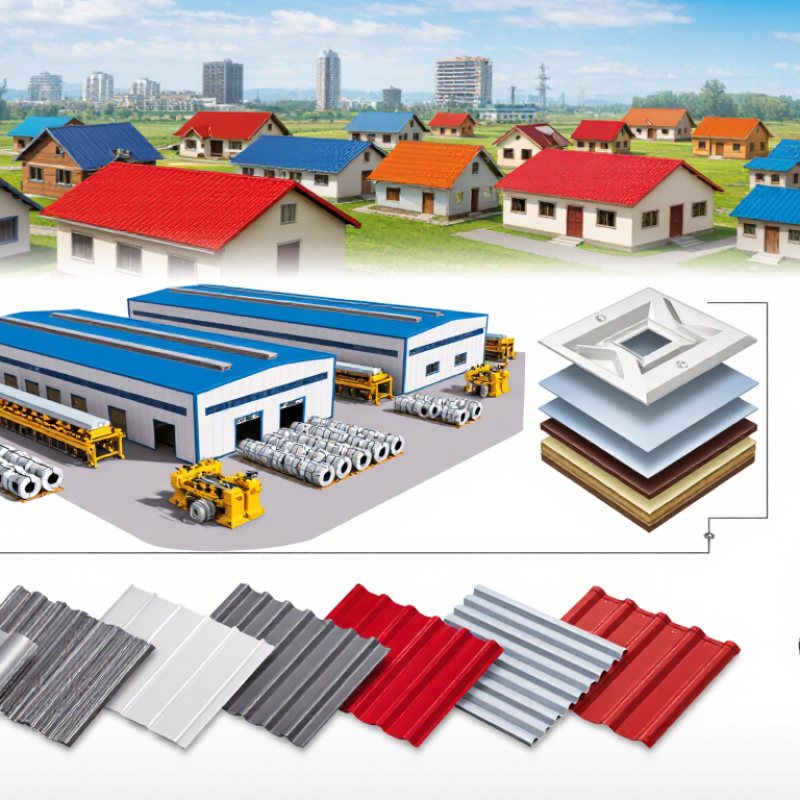
Coated metal roofing uses steel or aluminum sheets protected by metallic layers and factory-applied paint. The coating helps resist moisture, ultraviolet exposure, and surface corrosion. Common systems include galvanized steel, galvalume steel, and painted aluminum. They are installed on warehouses, homes, schools, and agricultural buildings.
The material is widely used because it combines low weight with long service life. The Metal Construction Association reports that properly maintained metal roofs can last 40 to 70 years. A 2024 Grand View Research report also identifies continued growth in the global metal roofing market, supported by renovation and energy-efficiency demand. Reflective coatings may reduce roof temperatures significantly. Lawrence Berkeley National Laboratory has reported that cool roofs can lower peak cooling demand by about 10% to 15% in suitable buildings. Still, performance depends on color, insulation, ventilation, and local climate. A bright coating cannot fix poor installation.
Tips: Check the coating specification, panel thickness, fastener compatibility, and warranty conditions. Ask for test results covering salt spray, weathering, and adhesion. Small details matter. In coastal areas, even a strong coating may need regular inspections. I have seen attractive roofs fail early when cut edges were left unprotected. Another practical concern is noise during heavy rain, especially inside lightly insulated spaces. Adding insulation and a properly designed underlayment usually improves comfort. Recyclability is another advantage, although actual recovery depends on local collection systems and construction waste practices.

Coated metal roof panels begin with galvanized or galvalume steel coils. Some projects use aluminum for lighter structures. Manufacturers inspect each coil for surface defects, thickness, and flatness before production starts. The steel is then uncoiled and cleaned with alkaline solutions. This removes oil, dust, and rolling residue. A chemical pretreatment follows, improving coating adhesion and corrosion resistance.
The prepared strip receives a primer through controlled roller coating. After a short curing cycle, workers apply the colored topcoat. Polyester, silicone-modified, and fluoropolymer coatings suit different exposure conditions. The coated strip passes through a heated oven, where temperature and speed must remain balanced. Too much heat can damage the finish. Too little can weaken adhesion. The process is precise, but not flawless.
After cooling, the continuous strip enters roll-forming equipment. Shaped rollers create ribs, seams, or tile-like profiles without cutting the coating. Automatic machines cut panels to specified lengths and punch fixing holes when required. Quality teams check coating thickness, color consistency, gloss, adhesion, and panel dimensions. They also review batch records for traceability. Experienced suppliers often test samples under humidity, salt spray, or ultraviolet exposure. These tests cannot reproduce every roof environment, however. Coastal air, poor ventilation, and careless installation may still shorten service life. Clear technical documents and realistic maintenance guidance matter as much as an attractive finish.
The chart presents representative midpoint thicknesses used in a typical prepainted coated-steel roofing system. The manufacturing sequence generally includes steel cleaning, metallic coating, cooling, chemical pretreatment, primer application, topcoat application, curing, roll forming, cutting, and final inspection. Actual specifications vary by roof design, corrosion class, coating system, and local standards.
Choosing a coated metal roof begins with climate, not appearance. Galvanized steel suits cost-sensitive projects and ordinary moisture exposure. Aluminum performs better near saltwater because it resists corrosion without relying on a zinc layer. Zinc offers long service potential, but it needs careful detailing and compatible fasteners. According to the 2024 International Energy Agency report, cooling demand remains a major driver of building electricity use. Light-colored, high-reflectance coatings can therefore reduce roof heat gain, especially in hot regions.
Polyester coatings are economical for moderate conditions and agricultural buildings. Silicone-modified polyester generally offers stronger color retention and scratch resistance. PVDF coatings fit premium commercial roofs exposed to intense sunlight, where fading and chalking matter. Acrylic coatings can support reflective roof designs, although performance depends heavily on film thickness and application quality. The U.S. Department of Energy reports that reflective roofs can reduce roof surface temperatures by up to 50°F under strong sun. That figure is useful, but actual savings vary with insulation, ventilation, and occupancy.
Tips: Check ASTM A755 for coated steel roofing guidance and review tested solar reflectance data. For coastal sites, request salt-spray and humidity testing, not only a warranty. Inspect cut edges, laps, and fasteners during installation. Small defects become large problems. In my experience, choosing the darkest finish for a hot warehouse often looks attractive but increases cooling pressure. That trade-off deserves honest reconsideration.
| Coating Type | Typical Binder and Finish | Common Substrate Materials | Typical Thickness Range | Main Performance Characteristics | Best-Suited Roofing Applications | Key Selection Considerations |
|---|---|---|---|---|---|---|
| Standard Polyester | Thermoset polyester paint; available in smooth, textured, or matt finishes | Galvanized steel Aluzinc-coated steel Aluminum | Approximately 15–25 micrometres on the exposed side, depending on the specification | Cost-effective color protection, good formability, and suitable resistance for normal outdoor conditions | Residential roofs, agricultural buildings, light commercial structures, wall and roof profiles | Suitable for moderate environments; confirm corrosion protection, substrate coating mass, and warranty requirements before use in coastal or industrial areas |
| Silicone-Modified Polyester (SMP) | Polyester resin modified with silicone; usually offered in smooth or low-gloss finishes | Galvanized steel Aluzinc-coated steel Aluminum | Approximately 20–35 micrometres on the exposed side | Improved ultraviolet resistance, gloss retention, chalk resistance, and weatherability compared with standard polyester | Large-span industrial roofs, commercial buildings, warehouses, and projects requiring a balance between cost and durability | Check the resin formulation, color stability requirements, forming radius, and local exposure conditions; product performance varies by formulation |
| PVDF | Fluoropolymer coating, commonly based on polyvinylidene fluoride resin; smooth or metallic finishes | Aluminum Galvanized steel Aluzinc-coated steel | Often about 25–30 micrometres for two-coat systems; follow the product specification | High resistance to ultraviolet radiation, color fading, chalking, and severe atmospheric exposure | Premium commercial roofs, airports, coastal buildings, high-visibility façades, and long-life architectural projects | Higher initial cost; verify resin content, total dry-film thickness, pretreatment, substrate compatibility, and forming limitations |
| Plastisol | Thick PVC-based coating, often with a lightly embossed or leather-grain surface | Galvanized steel Aluzinc-coated steel | Commonly about 100–200 micrometres, depending on the grade and application | Strong barrier protection, good resistance to mechanical damage, and good performance in humid or aggressive environments | Agricultural buildings, industrial roofs, wall cladding, and applications where impact and edge protection are important | May have lower high-temperature and long-term color performance than premium fluoropolymer systems; check temperature, UV, and chemical exposure limits |
| Acrylic Coating | Water-based or solvent-based acrylic coating; commonly used for reflective roof finishes | Metal roof panels Galvanized steel Aluminum | Varies widely; applied systems may require multiple coats to achieve the specified dry-film thickness | Good color options, UV resistance, and potential for solar reflectance when formulated as a cool-roof coating | Roof refurbishment, maintenance coatings, reflective roof systems, and projects prioritizing reduced solar heat gain | Surface preparation is critical; confirm adhesion, ponding-water resistance, application temperature, and compatibility with the existing roof coating |
| Metallic Zinc-Aluminum Alloy Coating | Metallic hot-dip alloy coating applied beneath the organic paint layer; commonly known as an Al-Zn coating system | Carbon steel Structural steel sheet | Common commercial coating designations include AZ50–AZ150, equivalent to approximately 50–150 g/m² total coating mass, depending on the standard | Enhanced corrosion resistance and heat reflectivity compared with conventional zinc-only coatings in many atmospheric environments | Roofing sheets, standing-seam panels, industrial buildings, warehouses, and hot or dry climates | Cut edges, fasteners, dissimilar-metal contact, forming damage, and compatibility with concrete or treated timber should be evaluated |
| Hot-Dip Galvanized Steel with Organic Topcoat | Zinc metallic coating protected by primer and prepainted topcoat | Carbon steel | Common coating designations include Z120–Z275, equivalent to approximately 120–275 g/m² total zinc coating mass, depending on the standard | Reliable sacrificial corrosion protection, broad availability, and good compatibility with roll-forming processes | General-purpose residential, agricultural, commercial, and industrial roofing | Select zinc coating mass according to atmospheric corrosivity; protect cut edges and avoid prolonged contact with alkaline or acidic materials |
| Aluminum Roofing Sheet | Usually supplied with polyester, SMP, or PVDF organic coating; may also be mill-finished | Aluminum sheet | Roofing sheet thickness is commonly about 0.7–1.2 mm, while the paint thickness depends on the coating system | Low density, natural oxide protection, good corrosion resistance in many coastal environments, and high reflectivity | Coastal buildings, lightweight structures, renovation projects, and roofs where reduced dead load is important | Requires allowance for thermal movement; avoid incompatible fasteners and direct contact with copper or certain treated materials |
| Stainless Steel Roofing | Mill-finished, mechanically finished, or supplied with a specialized protective coating | Austenitic stainless steel Ferritic stainless steel | Roofing thickness varies by structural design; approximately 0.5–1.0 mm is used in many architectural systems | Very high corrosion resistance when the grade and surface finish are correctly selected; long service potential | Marine architecture, chemical facilities, heritage projects, and high-end long-life roofing systems | High material cost; select the stainless grade according to chloride exposure and prevent contamination from carbon-steel fabrication tools |
Evaluating China’s top coated metal roof manufacturers requires more than comparing prices. World Steel Association’s World Steel in Figures 2025 reports that China produced about 1.005 billion tonnes of crude steel in 2024. This scale supports strong supply capacity, but it does not guarantee consistent roofing quality. Ask for the steel mill name, substrate grade, coating mass, paint system, and batch traceability. Check whether specifications follow GB/T 12754, EN 10346, or ASTM A653.
Request recent test reports for thickness, adhesion, hardness, salt spray resistance, and color stability. A reliable supplier should provide original records, not only polished certificates. Visit the factory if order volume justifies it. Watch the coil slitting area, storage conditions, and packaging details. Damp floors or exposed coils deserve attention. Small signs matter.
Compare measured results with the contract. A 0.45 mm panel may become thinner after forming, so confirm the finished thickness. Review production capacity using monthly output, delivery records, and rejection rates. The World Bank’s Logistics Performance Index shows that transport reliability varies across markets, making export planning important. Ask for container loading photos and moisture-control procedures. Some evaluations remain imperfect; laboratory data cannot fully predict coastal corrosion or installation damage. Use a third-party inspection before shipment, and keep retained samples for future dispute review.
Comparing Chinese coated metal roof suppliers requires more than checking a low quotation. Review substrate grade, coating mass, paint system, thickness tolerance, and warranty terms. ASTM A755 and EN 10346 provide useful reference points for prepainted steel and metallic coatings. Ask for mill certificates, coating test results, and sample panels from the same production line.
Pricing should be compared by delivered cost, not coil price alone. Include forming, packaging, inland transport, insurance, duties, and port charges. The World Steel Association reported global crude steel production at about 1.89 billion tonnes in 2023. This scale supports broad sourcing, but it does not guarantee consistent roofing quality.
UN Comtrade data can help verify a supplier’s export history, although trade codes may combine several steel products. That limitation deserves attention.
Tips: Request three matched quotations using identical specifications. Check color difference, gloss, salt-spray results, and cut-edge protection. Confirm whether the quoted thickness excludes coating mass. Ask for production photos, loading records, and an inspection plan before payment. A third-party inspection is often worthwhile. However, it cannot replace clear technical requirements. One common mistake is trusting a polished catalog too quickly. Factory capacity, export documents, and after-sales response should be tested with small orders first. Allow realistic lead times for peak seasons and port delays.