Why Choose Silicone Adhesive Tape for Your Projects?
In recent years, the use of Silicone Adhesive Tape has surged in various industries. Dr. Emily Chen, a leading expert in adhesive technologies, emphasizes the importance of this versatile material. She states, “Silicone adhesive tape offers unique benefits that traditional tapes simply cannot match.” This highlights the growing preference for silicone tapes in different projects.
Silicone Adhesive Tape stands out due to its high resistance to heat and moisture. It can withstand extreme temperatures while maintaining strong adhesion. Many engineers and manufacturers are turning to silicone options for applications in electronics and automotive industries. However, some still question its long-term durability compared to other adhesives.
Despite its advantages, not every project may benefit from Silicone Adhesive Tape. Users must consider specific requirements. Adhesives should match materials perfectly for optimal results. While silicone tape has a lot to offer, proper application and sitting can be challenging. As we explore this topic, understanding the best settings for silicone adhesive use is crucial.

Benefits of Using Silicone Adhesive Tape in Various Projects
Silicone adhesive tape has become a go-to choice for many projects. It offers excellent heat resistance. This makes it suitable for high-temperature applications. The tape is flexible and durable, which allows it to adhere well to various surfaces. From metal to plastic, it sticks effectively. Users often appreciate its ability to remain functional under extreme conditions. Yet, it may not bond as strongly on very smooth surfaces.
One notable benefit is its weatherproof nature. It works well for outdoor projects, resisting moisture and UV rays. Many people find it useful for sealing gaps and joints. However, users sometimes overlook the importance of proper surface preparation. Dust and grease can hinder adhesion. A clean surface can enhance the tape's performance significantly.
In addition, silicone adhesive tape is reusable. This makes it a cost-effective option for temporary fixes. It can be peeled off and repositioned without leaving residue. Still, some might find that the tape can lose its effectiveness with multiple uses. Evaluating the situation is crucial. Each project may have its unique challenges that require careful consideration.
Why Choose Silicone Adhesive Tape for Your Projects? - Benefits of Using Silicone Adhesive Tape in Various Projects
| Benefit |
Description |
Ideal Uses |
| High Temperature Resistance |
Maintains integrity under extreme temperatures, making it ideal for automotive and electrical applications. |
Automotive sealing, electrical insulation. |
| Waterproof Seal |
Provides a strong barrier against moisture, suitable for outdoor and marine applications. |
Marine use, outdoor sealing. |
| Chemical Resistance |
Resistant to many chemicals, making it suitable for industrial usage. |
Industrial applications, chemical storage. |
| Flexibility and Conformability |
Easily conforms to irregular surfaces, providing reliable adhesion and sealing. |
Odd shaped objects, complex assemblies. |
| Long-term Durability |
Offers a long-lasting solution without degradation over time, outlasting other adhesives. |
Permanent bonds, high-stress environments. |
Key Features of Silicone Adhesive Tape That Make It Stand Out
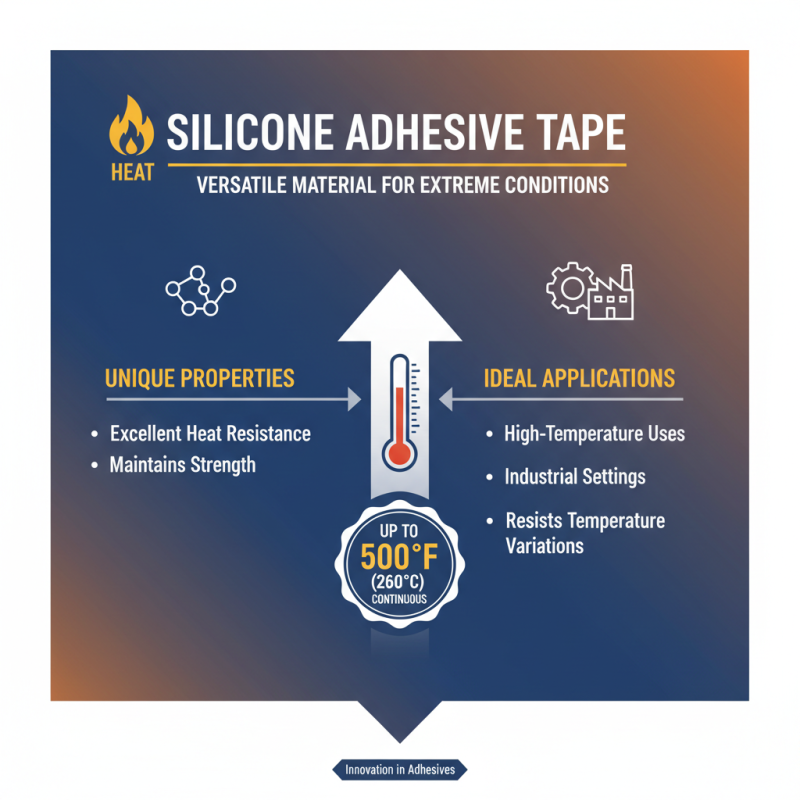
Silicone adhesive tape is a versatile material ideal for various projects. Its unique properties set it apart from other adhesives. First, it boasts excellent heat resistance, making it perfect for high-temperature applications. The tape can withstand extreme conditions without losing its adhesive strength. This feature is crucial in industrial settings where temperature variations are common.
Another standout quality is its moisture resistance. Unlike traditional tapes, silicone adhesive tape remains effective in wet environments. It seals surfaces securely, preventing water damage. This makes it an ideal choice for both indoor and outdoor projects. Users often overlook this aspect, leading to poor choices when sealing devices or repairing leaks.
**Tip:** When applying silicone adhesive tape, ensure the surface is clean and dry. This maximizes adhesion and prolongs the tape's effectiveness.
Additionally, silicone tape is non-toxic and safe for various applications. However, some users may find it challenging to cut or remove. Proper tools are needed for precise application. The tape can stick firmly, making repositioning difficult. It's important to test on a small area first to avoid waste.
**Tip:** Always store silicone adhesive tape in a cool, dry place. This helps maintain its properties and ensures longevity.
Applications of Silicone Adhesive Tape in Different Industries
Silicone adhesive tape is a versatile tool in many industries. Its resistance to extreme temperatures makes it ideal for automotive applications. This tape can endure hot engine components without losing its adhesive properties. In electrical industries, it provides excellent insulation. It is perfect for bundling wires and creating insulated connections. The waterproof nature also adds to its appeal, especially in outdoor settings.
In the healthcare sector, silicone adhesive tape plays a critical role. It is gentle on the skin, making it suitable for sensitive patients. This quality allows for secure medical bandaging without causing irritation. However, one might consider the best adhesive strength for specific applications. An overly strong bond could create issues during removal, potentially disturbing healing.
In construction and home improvement, silicone adhesive tape provides durability. It can withstand harsh weather conditions, making it great for sealing roofs or windows. Yet, users often overlook surface preparation. Proper cleaning can drastically enhance adhesion. Failing to do this could lead to peeling or reduced performance.
How to Properly Use Silicone Adhesive Tape for Optimal Results
Silicone adhesive tape is a versatile tool for various projects. To achieve the best results, proper usage is essential. Start by ensuring the surfaces are clean and dry. This helps the tape bond effectively. Press the tape firmly and evenly along the desired area. A snug fit enhances durability.
Tips: Avoid stretching the tape too much. It may come loose later. Make sure to cut the tape neatly with scissors for a clean finish. This prevents fraying at the edges, which can weaken the bond.
Consider the temperature when applying silicone tape. Cold surfaces can hinder adhesion. If applying in a cool environment, warm the surfaces slightly. Be mindful of overlapping sections, as they can create bumps. Strive for a smooth application to avoid errors. Practice makes perfect, and learning from mistakes is part of the process.
Silicone Adhesive Tape Usage Statistics
Comparison of Silicone Adhesive Tape with Other Adhesive Solutions
When comparing silicone adhesive tape to other adhesive solutions, the differences become clear. Silicone adhesive tape offers superior temperature resistance, withstanding ranges from -40°F to 500°F. In contrast, traditional tape types often fail at higher temperatures. According to a recent industry report, silicone tape maintains its adhesive properties longer than polyester or PVC options. This longevity leads to less frequent replacements.
Moreover, silicone adhesive tape is chemically resistant. It can endure exposure to oils, solvents, and even some acids without losing adhesion. Many professionals report fewer operational disruptions when using silicone adhesive in extreme conditions. However, it’s worth noting that silicone tape may not bond as effectively to some surfaces compared to others. Some projects might require additional prep or primers to achieve optimal performance.
In construction and automotive fields, silicone adhesive tape’s versatility shines. Industry data shows that 30% of engineers prefer silicone tape for sealing and protection applications. Despite this, some users suggest that applying silicone adhesive can be tricky, especially on uneven surfaces. Potential users should weigh these aspects when deciding.