Leave Your Message
Choosing a wall finish is no longer only a color decision. Texture affects light, touch, maintenance, and the perceived value of a room.
The global paints and coatings market reached approximately USD 206.56 billion in 2022, according to Grand View Research. Its report projects continued growth through 2030, driven partly by renovation and decorative applications. This broader market data does not measure Stone Texture Wall Paint alone. However, it shows why consumers need clearer performance standards before purchasing.
The best Stone Texture Wall Paint should balance appearance with practical durability. Look at adhesion, washability, coverage, drying time, texture consistency, and indoor emissions. A reliable product should provide a technical data sheet, batch information, and clear application instructions. Low-VOC claims also deserve careful checking. The U.S. Environmental Protection Agency explains that indoor air quality can be affected by household products and building materials, especially in poorly ventilated spaces.
Real experience matters here. A sample may look like natural limestone under showroom lighting, then appear flat beside a window. Rough finishes can hide minor wall defects, but they may collect dust in busy hallways. I once underestimated this detail. It changed how I judged texture.
Reports from Grand View Research and Fortune Business Insights offer useful market context, but they cannot replace hands-on testing. Apply a small sample to a primed wall. View it in daylight and warm artificial light. Touch it after curing. This guide explains how to compare texture, composition, application requirements, and long-term value before making a confident choice.
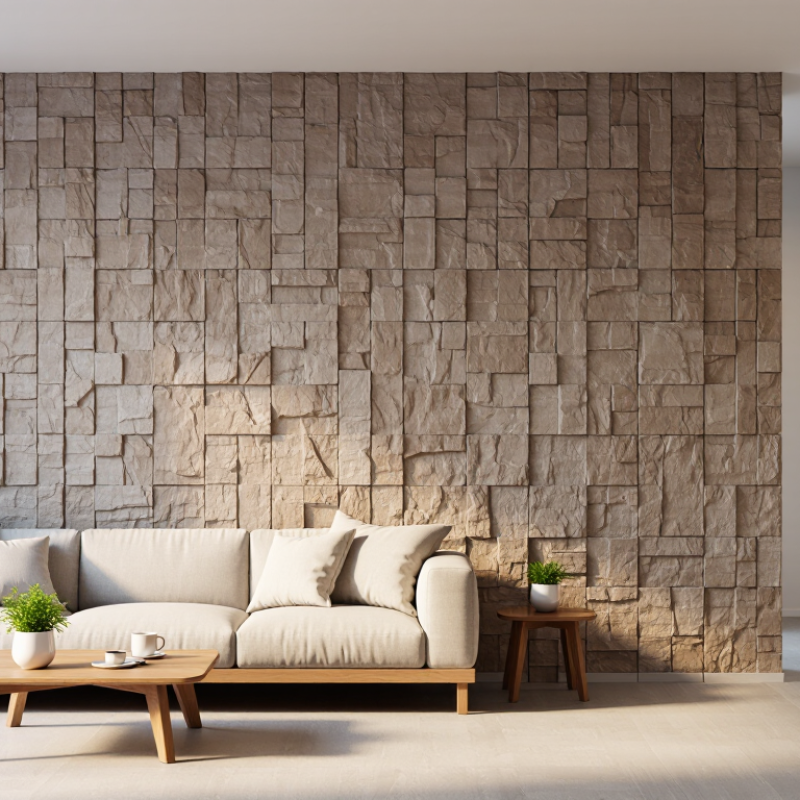
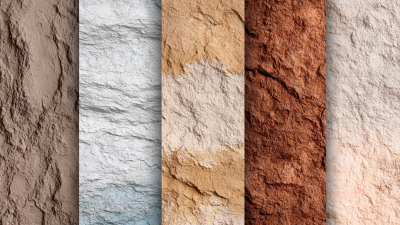
Stone texture wall paint is a decorative coating designed to imitate the depth of natural stone. It usually combines a resin binder with mineral aggregates, creating a granular surface that catches light differently across the wall. Texture matters. Key features include aggregate size, color stability, adhesion, washability, and moisture resistance. Fine particles create a subtle sandstone effect, while larger grains produce stronger shadows and a rougher touch.
Indoor air quality deserves careful attention. The U.S. Environmental Protection Agency reports that indoor pollutant levels can be two to five times higher than outdoor levels. Check the product’s VOC information, ventilation guidance, and curing time. The World Health Organization recommends keeping formaldehyde below 0.1 mg/m³ over a 30-minute period, so low-emission formulations are worth considering. A technical data sheet is more reliable than a showroom label.
Test a sample on the actual wall, preferably near a window. Observe it in morning and evening light. Touch the dry surface; excessive powdering suggests weak cohesion. For adhesion, a cross-hatch test based on ASTM D3359 can reveal early failure. I have found that darker textures expose patch repairs more easily. That detail is often missed. Also, textured finishes are not automatically waterproof. Poor substrate preparation can still cause blistering, cracking, or uneven color. A small test area may feel inconvenient, but skipping it can become an expensive mistake.
| Evaluation Dimension | Recommended Specification | Why It Matters | Practical Selection Tip |
|---|---|---|---|
| Texture Profile | Fine, medium, or coarse mineral texture | Texture controls the wall’s visual depth, shadow effect, and tactile appearance. | Choose fine texture for interiors and detailed surfaces; use medium or coarse texture to create a stronger stone-like effect. |
| Typical Coverage | Approximately 2–6 m²/L per coat, depending on texture depth | Heavier textures use more material than smooth wall coatings. | Measure the wall area and allow extra material for porous surfaces, uneven walls, and application loss. |
| Number of Coats | Usually 1–2 finish coats after priming | Multiple coats can improve color consistency, texture uniformity, and surface protection. | Follow the product’s recoat interval and avoid applying a thick layer in one pass. |
| Drying Time | Touch-dry: about 2–4 hours; recoat: commonly 4–24 hours | Temperature, humidity, ventilation, and coating thickness significantly affect drying. | Plan application when the area is well ventilated and avoid high humidity or very low temperatures. |
| Surface Compatibility | Cement plaster, concrete, masonry, gypsum board, and previously painted walls | A compatible, stable substrate reduces peeling, cracking, and uneven absorption. | Repair cracks, remove loose paint, clean contaminants, and apply a suitable primer before painting. |
| Binder Type | Acrylic or other water-based architectural coating binder | The binder influences adhesion, flexibility, weather resistance, and cleanability. | Select a more durable exterior-grade formulation for façades and exposed areas. |
| Water Resistance | Water-resistant after full curing; not automatically waterproof | Water resistance helps protect the finish from dampness, but it does not replace a waterproofing system. | Do not use decorative texture paint to repair active leaks, rising damp, or severe water penetration. |
| Breathability | Prefer vapor-permeable formulations for mineral walls | Vapor permeability can help reduce trapped moisture in suitable masonry assemblies. | Check technical documentation when coating old masonry, historic walls, or damp-prone areas. |
| Washability | Select a scrub-resistant or washable finish for high-contact areas | Deep texture can collect dust and may be harder to clean than smooth paint. | Use a softer brush or damp sponge and test cleaning methods on a concealed area first. |
| VOC Consideration | Prefer low-VOC, water-based formulations where available | Lower volatile organic compound emissions can improve indoor air quality during and after application. | Review the safety data sheet and local regulatory labeling rather than relying only on marketing terms. |
| Light and Color Stability | UV-resistant pigments for sunlit or exterior applications | Sun exposure can gradually fade or alter certain colors. | Use a sample panel in the actual lighting conditions before committing to the full wall. |
| Application Method | Roller, brush, trowel, hopper spray, or decorative finishing tool | The tool affects grain distribution, pattern consistency, and the final stone appearance. | Use the recommended tool and maintain a wet edge to minimize visible joins. |
| Maintenance and Repair | Retouchable finish with consistent batch and application records | Textured surfaces can be difficult to reproduce exactly after localized damage. | Keep leftover material, color details, and application notes for future repairs. |
Note: Coverage, drying time, VOC classification, and performance vary by formulation, substrate, climate, and application thickness. Always verify the product technical data sheet before use.