Faux Stone Tips for Choosing the Best Options for Your Project
When considering Faux Stone for your next project, the choices can be overwhelming. Expert designer Laura Wright emphasizes, "Selecting the right Faux Stone is crucial for both aesthetics and durability." The landscape of manufacturing Faux Stone has evolved, offering various styles and textures. Some options emulate natural stone beautifully, while others may lack authenticity.
Designing with Faux Stone invites creativity. It’s important to weigh material quality against visual appeal. As brands improve production techniques, the distinction between real stone and Faux Stone often blurs. However, not every option is created equal. Some may degrade faster than expected.
For a successful project, focus on reputable manufacturers. Test samples in your space before making decisions. Faux Stone offers versatility, but careful consideration is vital. A thoughtful choice can enhance your design, while a hasty one might lead to regret.
Understanding Faux Stone: Definition and Benefits
Faux stone offers a versatile and durable option for various projects. It looks impressive yet is easy to maintain. Understanding its definition is essential. Faux stone is a manufactured material designed to imitate real stone. It provides an aesthetically pleasing finish without the high cost or weight of genuine stone.
When selecting faux stone, consider your project's specific needs. Look for textures and colors that complement your design style. Pay attention to the material's durability, especially for exterior applications. Weather-resistant options are crucial; they ensure longevity and decreased maintenance.
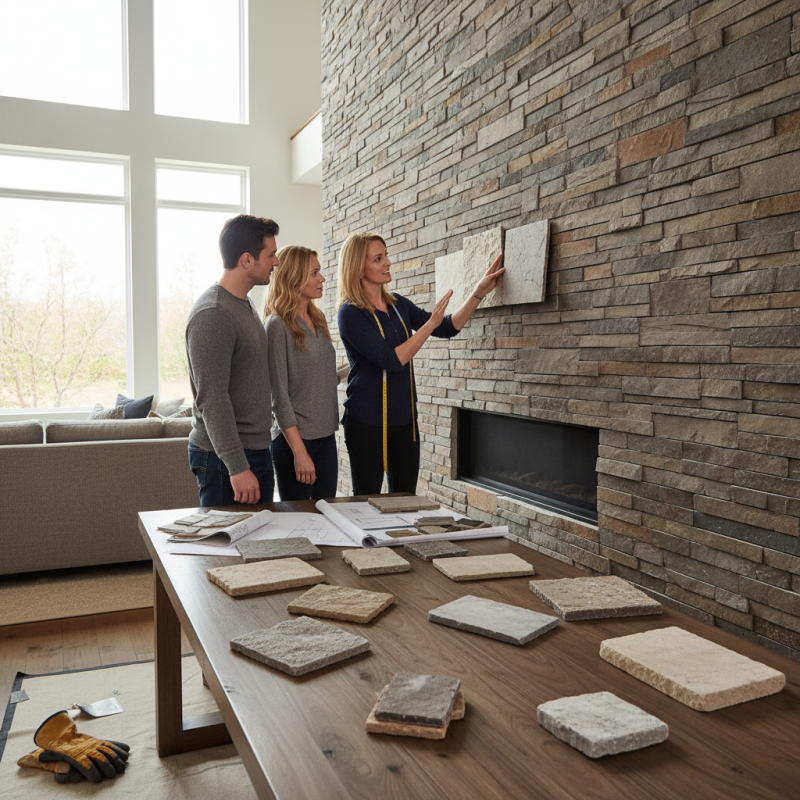
Tip: Always request samples before making a final choice. This allows you to assess how the faux stone will look in your space. Installation methods can vary, so review guidelines thoroughly. It's important to understand that not all faux stones hold up under extreme conditions. Ensure you choose wisely for the specific environment.
Faux Stone Options for Your Project
| Option |
Material Type |
Benefits |
Common Use Cases |
| Polyurethane |
Synthetic |
Lightweight, easy to install, weather-resistant |
Exterior and interior walls, accent features |
| Fiberglass |
Composite |
Durable, low maintenance, customizable finishes |
Pool areas, outdoor facades |
| Cement Board |
Mineral-based |
Fire-resistant, highly durable, versatile |
Fireplaces, heavy use areas |
| Cast Stone |
Concrete |
Elegant appearance, cost-effective, durable |
Commercial buildings, landscaping |
| EPS Foam |
Foam |
Very lightweight, affordable, easy to shape |
Decorative moldings, temporary structures |
Different Types of Faux Stone Materials Available
Faux stone materials have gained popularity in home design due to their versatility and affordability. The market offers a range of options, including polyurethane, fiberglass, and concrete-based products. According to a recent industry report, faux stone can replicate the look of natural stone at a fraction of the cost, appealing to homeowners on a budget.
When selecting faux stone, consider the weight and installation process. Lightweight options such as polyurethane are easier to handle and install. However, they may not be as durable as heavier materials like concrete. Make sure to assess the intended use of the faux stone, whether for an interior accent wall or an outdoor feature.
Tip: Always check for UV resistance if the faux stone will be exposed to sunlight. This will ensure the longevity of the color and finish.
Another key consideration is texture. Faux stone products vary in texture, from smooth to rough finishes. This variation can impact the overall aesthetic of your project. Samples are crucial for visualization. They help you see how the material complements existing features in your space.
Tip: Compare the density of different materials. Higher density often means better durability and realism. Choosing the right faux stone ultimately enhances your design while maintaining a budget-friendly approach.
Key Factors to Consider When Choosing Faux Stone
When selecting faux stone for your project, consider various key factors. Look at the material's texture and appearance. A natural look enhances the aesthetic value. Some faux stones mimic real stone closely, while others may look too artificial. Test samples under different lighting to see their true color and texture.
Durability is another crucial aspect. Not all faux stones are created equal. Some may fade or chip over time. Choose products that can withstand the elements if your project is outdoors. Investigate the manufacturer’s reputation, as high-quality options often come from trusted sources.
Cost is also important, but it should not be the only factor. Some cheaper options may require replacements sooner, leading to higher costs in the long run. Lastly, installation is key; certain styles may be harder to install than others. This can impact both your budget and project timeline. Balancing these factors will lead to a successful faux stone selection.
Installation Techniques for Optimal Faux Stone Use
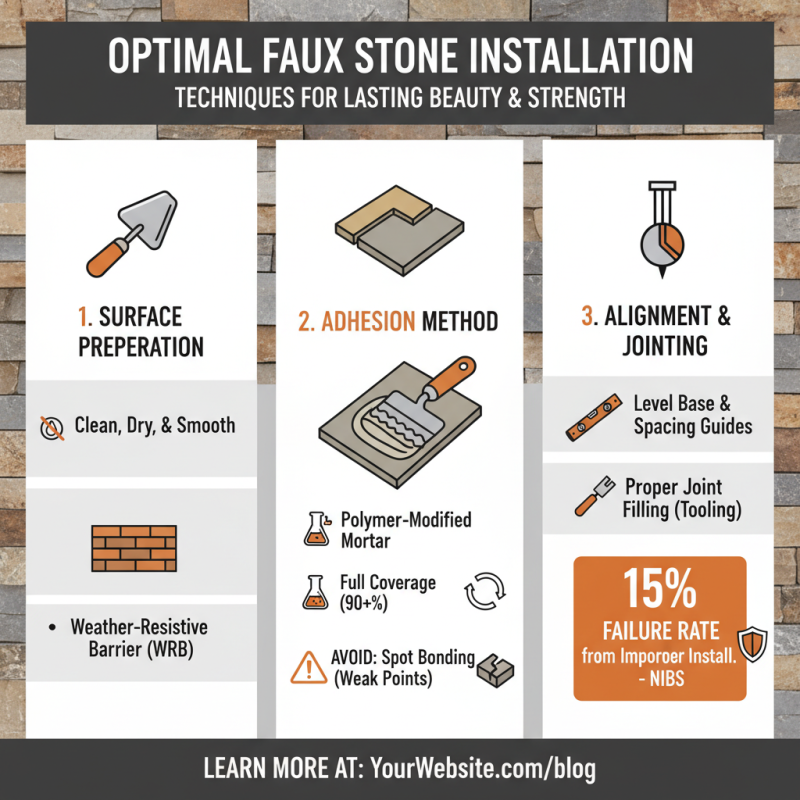
When selecting faux stone options, installation is crucial. The right techniques can make or break your project. According to the National Institute of Building Sciences, improper installation can lead to structural failures in 15% of cases. Understanding how to properly adhere faux stone can avoid these pitfalls.
Careful surface preparation is key. The wall must be clean, dry, and free from any residues. Experts advise using a level to ensure a straight installation. Even minor misalignments can detract from the overall appearance. Make sure to use a quality adhesive, as it can affect durability and appearance over time. Choosing a mortar mix that suits the environment is vital; wet areas need a different approach compared to dry climates.
Consider the details of the joints as well. Joints can become weak points. Inadequate caulking can lead to moisture intrusion, which may damage the underlying structure. Installing faux stone with thoughtfully placed joints ensures a more integrated look. Some projects involve experimentation with different joint techniques. It’s often not a one-size-fits-all situation. Ensure that your final design reflects both aesthetics and durability.
Maintaining and Caring for Your Faux Stone Surfaces
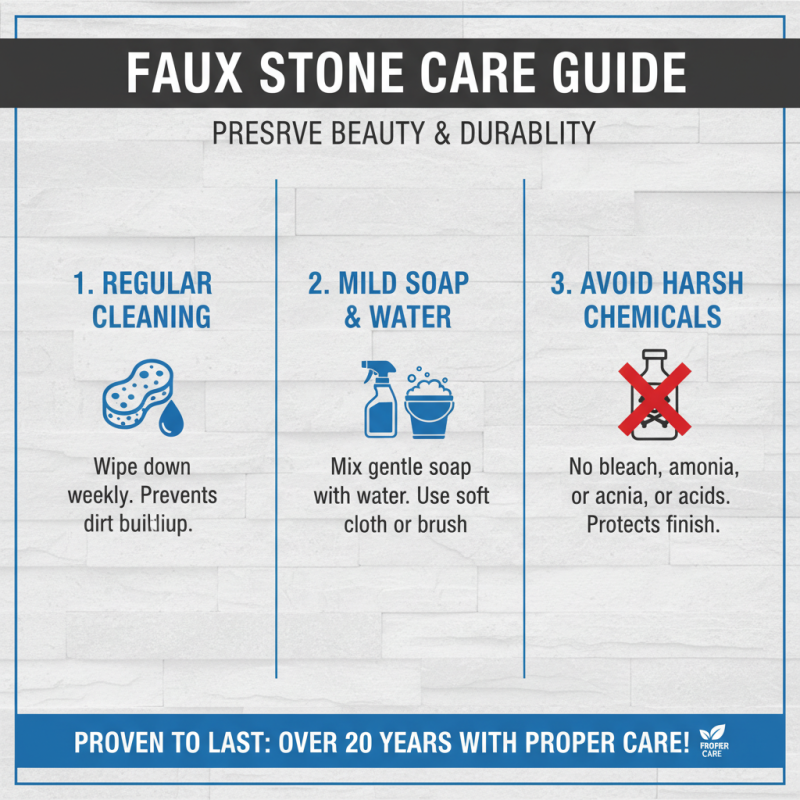
Maintaining faux stone surfaces requires attention and care. Regular cleaning is essential to preserve their aesthetic appeal. For general cleaning, use a mild soap and water solution. Avoid harsh chemicals; they may damage the finish. Studies show that a well-maintained faux stone surface can last over 20 years.
When dealing with scratches or stains, prompt action is crucial. For minor scratches, consider using a fine-grit sandpaper lightly. If the stain persists, a mixture of baking soda and water can be effective. It’s important to test this on a small area first. Many helpful resources recommend deep cleaning every 6 to 12 months to prevent buildup.
Tip: Seal your faux stone surfaces regularly. This step can help protect them against moisture and stains. Applying the right sealant not only enhances durability but also keeps colors vibrant. Remember, investing time in maintenance will reflect on the longevity and overall look of your faux stone projects.