What is Hot Melt Silicone and How is it Used?
Hot Melt Silicone is making waves in various industries. This innovative material combines flexibility with strength. Dr. Emily Hartman, a leading expert in polymer technologies, highlights its versatility. She states, "Hot Melt Silicone adapts to demanding environments seamlessly."
This adaptability is why many manufacturers are turning to Hot Melt Silicone. In packaging, more companies prefer it for secure sealing. In electronics, it provides excellent thermal stability. With such applications, it’s easy to see its growing popularity.
Yet, there are challenges to consider. The production process can be complex. Not all Hot Melt Silicone products are created equal. Quality control is crucial. Each application demands specific formulations. Companies must reflect on their choices carefully. Understanding the nuances of Hot Melt Silicone can lead to better outcomes.
What is Hot Melt Silicone?
Hot melt silicone is a versatile adhesive used in various industries. It is made from silicone polymers that provide unique bonding properties. This material melts when heated, allowing it to flow easily before it cools and sets. Once cooled, it offers strong adhesion and flexibility. Its resilience to temperature fluctuations makes it suitable for diverse applications, from electronics to crafts.
When using hot melt silicone, ensure your workspace is well-ventilated. The melting process can emit fumes that are not ideal for prolonged exposure. Always wear appropriate safety gear, like gloves and goggles. Test the adhesive on a small surface before applying it to your main project. This prevents potential damage or unwanted reactions, allowing you to experiment without significant risks.
Hot melt silicone is known for its quick drying time. However, be cautious. It can bond too quickly, making adjustments difficult. Take your time when applying the adhesive for the best results. Remember, practice makes perfect. Sometimes, mistakes lead to the best learning experiences. Balancing speed and precision is key.
What is Hot Melt Silicone and How is it Used?
| Property |
Description |
Applications |
| Type |
Thermoplastic elastomer |
Adhesives, sealants |
| Melting Point |
Typically between 120°C to 200°C |
Hot melt adhesive applications |
| Curing Time |
Rapid setting upon cooling |
Bonding processes |
| Flexibility |
High elasticity and flexibility |
Flexible joints in various products |
| Chemical Resistance |
Resistant to oils and various chemicals |
Sealants for automotive and industrial use |
| Temperature Resistance |
Stable over a wide temperature range |
Outdoor applications, high-temperature settings |
Composition and Properties of Hot Melt Silicone
Hot melt silicone is increasingly recognized in various industries for its unique properties. Its composition typically includes polydimethylsiloxane and curing agents, which create a robust and pliable material when heated. This type of silicone offers excellent adhesion, moisture resistance, and durability. In a recent market report, researchers noted its versatility in both industrial and consumer applications. The demand for hot melt silicone has been growing steadily, estimated to reach $1.5 billion by 2025.
One key property of hot melt silicone is its thermal stability. It remains effective in extreme temperatures, ensuring longevity in various environments. Additionally, the material is known for its flexibility, allowing it to conform to different shapes and surfaces. However, it's important to consider the environmental impact of silicone products. While it offers many advantages, its production can involve significant energy use.
Tip: Always test the silicone in a small area before full application.
Users should also be mindful of the curing time and conditions required for optimal performance. Improper application can lead to adhesion failures or reduced effectiveness. Inconsistent heating can cause irregular bonding, which may not be obvious at first. It's essential to focus on proper technique and environmental factors to maximize the material’s effectiveness.
Hot Melt Silicone Properties and Applications
This bar chart illustrates various properties of Hot Melt Silicone, including Adhesion Strength, Temperature Resistance, Flexibility, Viscosity, and Cure Time. The values are represented on a scale of 0 to 100, highlighting the effectiveness of Hot Melt Silicone in different applications.
Applications of Hot Melt Silicone in Various Industries
Hot melt silicone is gaining traction in various industries for its versatility and performance. According to a recent market report by Grand View Research, the global hot melt adhesive market is expected to reach USD 7.47 billion by 2025, indicating a growing demand for such materials. Hot melt silicone exhibits strong adhesion and high elasticity, making it suitable for applications where flexibility is essential.
In the automotive sector, hot melt silicone is used for bonding components and sealing joints. It withstands extreme temperatures and offers durability. In a study by MarketsandMarkets, the automotive adhesives market alone is projected to grow from USD 20.69 billion in 2020 to USD 27.71 billion by 2025. This growth showcases the increasing reliance on high-performance materials. However, challenges remain. The recycling of hot melt silicone products continues to be a concern, posing environmental questions that need addressing.
The packaging industry also increasingly utilizes hot melt silicone for its quick-setting properties. It enhances production efficiency and reduces waste. According to a report from Mordor Intelligence, the global packaging adhesive market is expected to surpass USD 5 billion by 2024. Yet, there’s room for improvement in adhesive formulations to meet sustainability targets. As industries evolve, finding a balance between performance and environmental responsibility remains a vital challenge.
Advantages of Using Hot Melt Silicone Adhesives
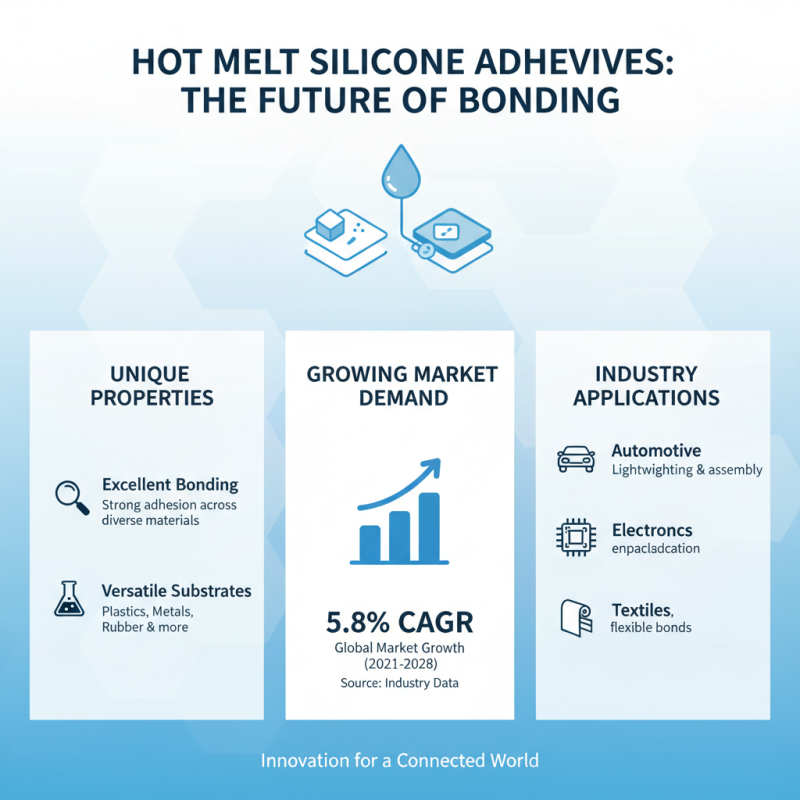
Hot melt silicone adhesives are gaining traction in various industries due to their unique properties. These adhesives provide excellent bonding capabilities on a wide range of substrates, including plastics, metals, and even rubber. Data indicates that the global hot melt adhesives market is expected to grow at a CAGR of 5.8% from 2021 to 2028, showcasing rising demand.
One of the major advantages of hot melt silicone is its quick curing time. This allows manufacturers to streamline production processes. According to a recent report, approximately 30% of assembly time can be reduced by using these adhesives. Their versatility is another key point. Hot melt silicone can adhere to different materials, making it suitable for diverse applications ranging from packaging to automotive industries. However, the reliance on such adhesives can sometimes lead to compatibility issues. Not every surface reacts positively to hot melt applications.
Moreover, hot melt silicone adhesives boast impressive flexibility and resistance to extreme temperatures. They function effectively in environments where traditional adhesives may fail. A study revealed that up to 65% of bonding failures in extreme conditions could be prevented with hot melt silicone. Despite these advantages, careful consideration is necessary for storage and application techniques to avoid issues. They require specific guidelines for temperature control and handling to ensure optimal performance.
Tips for Proper Application and Handling of Hot Melt Silicone
Hot melt silicone is a versatile adhesive used in various applications. To ensure optimal results, proper application and handling are crucial. Start by preparing your workspace. Make sure it is clean and organized. Remove any dust or debris from surfaces. This helps the silicone bond better.
Temperature control is vital. Use the adhesive within its recommended temperature range. Check the gun to avoid overheating. Overheating can lead to a thick, unusable consistency. When applying, use steady pressure. Uneven application can result in weak spots. If you notice bubbles or imperfections, take a moment to assess. It might indicate the adhesive wasn't smoothly applied.
Practice makes perfect. Not every application will be flawless. You may find yourself needing to pull back and redo sections. This can be frustrating, but it's part of the learning curve. After application, allow adequate curing time. Patience ensures a strong bond. If you rush, the results may not meet your expectations. Always pay attention to details, as they can significantly impact overall performance.