inquiry
Leave Your Message

Why Choose Fake Stone Wall Panels for Your Project?

A stone finish can make an entryway feel grounded, a fireplace wall feel warmer, or a plain room feel more distinctive. But natural stone is not always practical for a renovation. It can be heavy, costly, and demanding to install. Fake Stone Wall panels offer another way to create a stone-inspired surface, often with less weight and a simpler installation process. The exact benefits depend on the product, though.

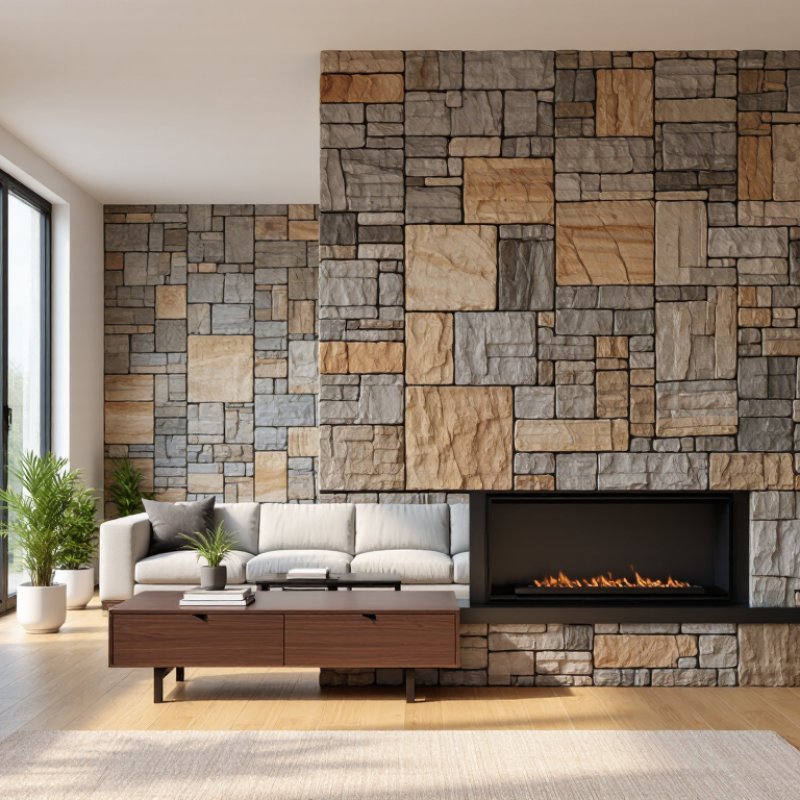
The visual effect comes down to details. Look closely at the texture, panel edges, color variation, and how seams meet around corners. From across a room, a convincing surface may feel natural. Up close, repeated patterns can be easier to spot. That matters. A sample viewed under your own lighting can reveal more than a polished product photo.

Panels may suit feature walls, basement spaces, or areas where adding substantial weight is a concern. Still, “easy to install” does not mean every wall is ready for panels. Check the manufacturer’s installation guide, substrate requirements, and care instructions before buying. For damp or heat-exposed locations, confirm that the specific product is rated for that use. A qualified installer can help assess tricky surfaces.

Cost and convenience are important, but appearance is only part of the decision. Compare the full project cost, including trims, adhesives, tools, and labor. I would not call faux panels a perfect substitute for quarried stone; their finish and feel can differ. That is worth considering. With realistic expectations and careful product checks, they can provide a practical decorative option.
Why Choose Fake Stone Wall Panels for Your Project?

What Fake Stone Wall Panels Are Made Of and How They Are Manufactured

Fake stone wall panels are molded to reproduce the depth and grain of quarried stone, but their ingredients vary. Lightweight versions often use molded polyurethane; heavier panels may contain cement, sand, and mineral aggregates. Pigments are mixed in or applied to the surface, while molds create irregular edges and shallow fissures. The U.S. Geological Survey’s Mineral Commodity Summaries 2025 estimates U.S. cement production at about 84 million metric tons in 2024. That figure reflects the scale of cement supply, not the recipe of any particular panel.

Manufacturing starts with a detailed mold, often taken from natural stone textures. For cement-based panels, producers blend cement, aggregates, water, and colorants, then pour or press the mixture into molds. Curing hardens the panels before trimming and surface finishing. Polyurethane panels are formed by injecting or pouring a reactive mixture into molds, where it expands and sets. Small variations matter. Pigment placement can affect how convincing a stone face looks, and uneven curing may cause defects. The National Ready Mixed Concrete Association’s industry Environmental Product Declaration program reports impacts by concrete mix design, showing why cement content and local materials matter when assessing a product’s footprint. Ask for product-specific composition and test data; appearance alone does not reveal what is inside.
How Panel Weight and Substrate Conditions Affect Project Suitability

Why Choose Fake Stone Wall Panels for Your Project?

Panel weight can change what a wall can safely support and how easily installers can handle each piece. Lightweight panels may suit interior drywall when it is sound, securely fixed, and prepared according to the panel maker’s instructions. Heavier products may require stronger backing or different fasteners. Check the product’s stated weight per panel, not just its appearance.

Small details matter. A wall with loose paint, damp patches, or uneven joints can weaken adhesion or leave panels sitting proud. On masonry, inspect for crumbling mortar and trapped moisture. On framed walls, confirm that the sheathing and studs are stable. Clean and dry surfaces are a sensible starting point, but they do not solve every substrate problem. Follow the specified fixing method.

A common mistake is choosing panels by color before checking wall conditions. It is tempting to assume a light panel works anywhere. Not quite. Consider ceiling height, access, and whether one person can position panels safely. A small test area can reveal awkward cuts, visible seams, or poor bonding before the full wall is covered. It may feel like an extra step, but skipping it can be costly. The substrate deserves a closer look.

Why Choose Fake Stone Wall Panels for Your Project? — How Panel Weight and Substrate Conditions Affect Project Suitability

Panel or finish type Typical surface weight* Substrate and support considerations Typical project suitability Key checks before installation
Lightweight molded faux-stone panels About 1–3 lb/ft² (5–15 kg/m²) Sound, flat drywall or plywood may be suitable indoors when the panel system permits it. For exterior use, follow the approved wall assembly and fastening details. Accent walls, fireplace surrounds, and some approved exterior applications. Low weight can reduce added dead load compared with masonry finishes. Check the product’s published weight, fire rating, location approval, required fasteners, and whether adhesive alone is allowed.
Flexible faux-stone sheets or thin panels Often about 1–4 lb/ft² (5–20 kg/m²); product values vary The surface generally needs to be clean, dry, stable, and smooth. Texture, paint, dust, or moisture can reduce adhesive bond. Interior feature walls and other applications specifically permitted by the product instructions. Confirm substrate compatibility, adhesive type, temperature limits, joint treatment, and any surface preparation or primer requirements.
Heavier faux-stone cladding panels Approximately 3–8 lb/ft² (15–39 kg/m²), depending on construction May require mechanical fastening into framing or another structurally suitable backing. Unsupported drywall should not be assumed adequate. Projects where a deeper, more substantial panel is desired and the wall can carry the added load. Check panel weight, fastener schedule, framing locations, wall condition, and whether the system requires a drainage or weather-resistive layer.
Thin manufactured stone veneer (comparison) Commonly about 8–15 lb/ft² (39–73 kg/m²); verify the selected product Typically needs a specified masonry-style assembly, which may include lath, scratch coat, and suitable backing; requirements depend on the installation and local code. Useful as a weight comparison when choosing between lightweight panels and a more masonry-like veneer finish. Review the complete assembly weight, attachment method, moisture management, and applicable local building requirements.
Any panel over existing tile or painted surfaces Use the selected panel’s published weight The existing finish must be firmly bonded and free of loose areas, grease, or moisture. A weak coating remains a weak link even when the panel itself is light. Potentially suitable only if the panel and adhesive instructions allow installation over that specific surface. Inspect for hollow, cracked, peeling, or damp areas; prepare or remove unsound material before installation.

*Weights are approximate planning ranges, not product specifications. Actual weight and installation requirements vary by material, thickness, and system. Confirm published data and instructions for the selected panels, assess the condition and capacity of the substrate, and check applicable building requirements before installation.

When the IRC’s 15-lb/ft² Adhered-Veneer Limit Applies

Why Choose Fake Stone Wall Panels for Your Project?

When the IRC’s 15-lb/ft² Adhered-Veneer Limit Applies

The 2021 International Residential Code sets a 15-pound-per-square-foot limit for adhered masonry veneer in covered applications. That equals 135 pounds across a 9-square-foot wall area. The limit is not a blanket rule for every faux-stone panel: product type, wall construction, and the locally adopted code matter. The IRC’s Chapter 7 provisions and the product’s ICC-ES evaluation report are useful starting points. Check the documented installed weight, not just the panel’s shipping label. Mortar and other required layers can change the assembly weight. Small detail, big consequence.

ASTM C1670/C1670M addresses adhered manufactured stone masonry veneer units, while ASTM C1780 covers their installation. These standards help define the product and installation context; they do not replace local code review. If the proposed assembly exceeds the applicable limit, do not assume lighter-looking panels solve the issue. Confirm whether the code’s exception applies to the actual backing, such as concrete or masonry, and ask the building official or design professional to review the assembly. A clear specification should state panel weight, installation materials, substrate, and fastening method. Even then, paperwork can be imperfect; verify that the report covers the exact product and wall condition being built.

What ASTM E84 Class A Means: FSI 0–25 and SDI ≤450

For a fake stone wall panel, ASTM E84 Class A is a useful fire-test result to review. It means the tested material recorded a Flame Spread Index (FSI) of 0–25 and a Smoke Developed Index (SDI) of 450 or less. FSI describes how quickly flame spreads across a surface in the test; SDI measures smoke development. That distinction matters. ASTM E84 is a controlled surface-burning test, not a rating of fire resistance or a prediction of every real fire.

Check the test report for the exact panel construction, thickness, and installation details. A panel tested on one backing may not perform identically on another. Adhesives, joints, air gaps, and the wall substrate can all affect the finished assembly. Numbers need context. Ask whether the report matches the product and installation planned for your project, then confirm applicable local requirements with the project professional. A textured panel may resemble rough-cut limestone, but its appearance cannot tell you its fire-test result. I would not treat Class A as a blanket guarantee; it is one specific piece of evidence to weigh.

How ASTM C1780 Guides Adhered Manufactured Stone Veneer Installation

Fake stone wall panels can create the texture of masonry without the mass of full-thickness stone. Their performance, however, depends on what sits behind the surface. ASTM C1780 provides installation guidance for adhered manufactured stone veneer, helping crews plan a reliable assembly rather than treating panels as simple decoration.

The work begins with a suitable substrate and careful moisture management. Install the required water-resistive barrier, flashing, lath, and mortar layers according to the project conditions and applicable instructions. Then set the veneer with compatible mortar, keeping joints consistent and details around windows and corners neat. Small gaps matter. Water often finds the detail everyone hurried past. ASTM C1780 is a guide, not a substitute for current project requirements, product instructions, or local building codes.

Tips: Check that flashing directs water outward before covering it. Keep mortar off the panel faces, and inspect the scratch coat for even coverage. A quick photo log can help catch missed areas. It may feel fussy, but repairs later are worse.

Even skilled installers should pause when the wall assembly differs from typical conditions. Verify material compatibility and allow proper curing time for the weather. One imperfect joint may not announce itself immediately; that is why steady checks during installation matter.