Silicone Adhesive Dots are becoming essential for clean, reliable bonding in packaging, signage, electronics, furniture, and craft production. Global buyers now expect more than simple tack. They need stable adhesion, neat application, low residue, consistent thickness, and dependable performance across changing temperatures. In 2026, supplier selection will depend on material quality, manufacturing control, customization, and honest technical support.
Silicone adhesive specialist Dr. Laura Chen explains, “A reliable adhesive dot begins with controlled materials, not attractive packaging.” This principle matters when buyers compare suppliers across international markets. A small dot may look simple, yet its performance depends on silicone formulation, liner quality, die-cut accuracy, storage conditions, and surface compatibility. Good suppliers should provide clear technical data, sample testing, production details, and realistic lead times. Claims without evidence deserve caution.
This guide examines leading Silicone Adhesive Dots suppliers for global buyers. It considers product consistency, bonding strength, temperature resistance, customization options, packaging, export experience, and customer service. Some suppliers may offer lower prices. That does not always mean better value. A weak liner, uneven coating, or inconsistent diameter can create costly production problems. Buyers should test before committing. Even this approach is imperfect, because laboratory results may differ from factory conditions. Still, careful comparison reduces avoidable risk. The right supplier should support the application, not merely sell adhesive dots.
Silicone Adhesive Dots: Definition, Features, and Common Applications
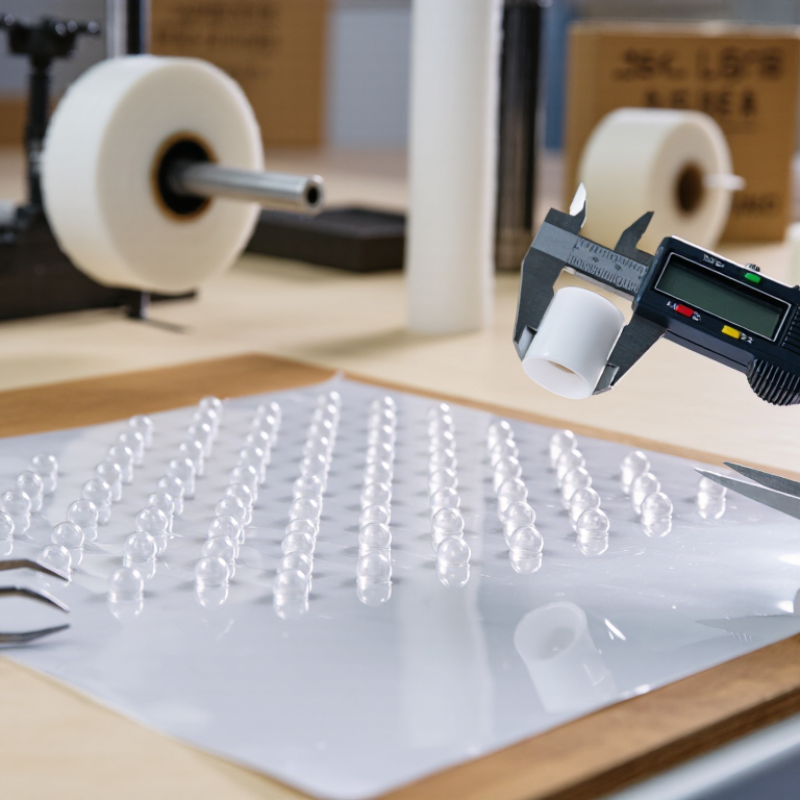
Silicone adhesive dots are pre-cut, round pieces of silicone-based adhesive supplied on release liners. They provide clean, targeted bonding without liquid glue or bulky mechanical fasteners. Their soft, elastic structure helps absorb vibration and compensate for small surface irregularities. They stay discreet. Many grades resist moisture, aging, ultraviolet exposure, and temperature changes. However, performance depends heavily on the formulation and the surfaces being joined.
These dots are commonly used for mounting signs, securing decorative panels, stabilizing small electronic components, and preventing furniture from sliding or scratching. In packaging, they can add cushioning between rigid parts. During product evaluation, buyers should test adhesion on the actual materials, especially painted metal, glass, plastics, and textured surfaces. Surface cleaning matters. Dust and oil can reduce contact quickly. Thickness, diameter, liner quality, peel strength, shear strength, and temperature resistance also deserve careful review. A reliable supplier should provide technical data, batch consistency, sample rolls, and clear storage guidance. Practical testing often reveals issues that a specification sheet misses. Silicone dots are not perfect for every application. Some surfaces need stronger bonding, while others require easier removal without residue. Humidity, pressure, and application speed can change results. Careful sampling remains the safest purchasing step for global buyers.

Global buyers should evaluate silicone adhesive dot suppliers beyond catalog size and quoted price. Grand View Research reports that the global silicone adhesives market was valued at approximately USD 3.6 billion in 2023, with continued growth expected through 2030. This expansion increases supplier choices, but not necessarily supplier quality. Ask for technical data showing peel strength, shear resistance, temperature range, and aging performance. Test dots on the actual substrate, not only on laboratory glass. Real surfaces behave differently.
Material consistency deserves close attention. A dependable supplier should control silicone viscosity, liner release, dot diameter, and adhesive weight through documented inspection procedures. Request batch records, traceability codes, and retention samples. ISO 9001 certification can indicate a structured quality system, but it does not prove application performance. Independent testing still matters. MarketsandMarkets identifies electronics, automotive, and medical applications as important growth areas for silicone adhesives, where contamination control and thermal stability often influence purchasing decisions.
Supply capability is equally practical. Review monthly capacity, minimum order quantities, packaging protection, and lead-time history. Ask how the supplier manages humidity, dust, and temperature during production and storage. A low price may hide unstable output or excessive packaging waste. That is easy to miss. I would also compare three production batches before approval, because one successful sample can create false confidence. Supplier communication should be measured too: clear corrective-action reports are stronger evidence than polished sales promises.
The 2026 list of leading silicone adhesive dots suppliers focuses on verified manufacturing capability, not advertising reach. Suppliers should provide clear data on peel strength, shear performance, temperature resistance, and liner quality. Grand View Research estimates the global silicone adhesives market will grow at about 6% annually through 2030. That growth supports wider demand for reliable adhesive dots in electronics, signage, medical packaging, and lightweight assembly.
Leading suppliers usually offer multiple diameters, thicknesses, and adhesive grades. They also support custom die-cutting, clean-room production, and documented batch control. For global buyers, ISO 9001 certification is useful, but it does not replace product testing. Request samples first. Press several dots onto painted metal, glass, and textured plastic. Then check edge lift after 24 and 72 hours. Small failures become expensive during mass production.
Technical reports from MarketsandMarkets identify temperature stability, surface compatibility, and application efficiency as important silicone adhesive market drivers. However, published data rarely reflects every real-world surface. This is where supplier experience matters. A supplier may offer excellent shear strength, yet perform poorly on dusty cartons or low-energy plastics. I would also question unusually broad performance claims. They may be accurate under laboratory conditions, but not during humid shipping or rushed assembly. The strongest 2026 supplier list therefore favors traceable testing, responsive engineering support, and honest limits over impressive wording.
| Supplier Profile | Primary Supply Region | Typical Product Format | Common Thickness Range | Typical Temperature Range | Adhesive Performance | Available Liner Options | Common Compliance Documentation | Typical MOQ Range | Indicative Production Lead Time | Customization Capability | Buyer Suitability |
|---|---|---|---|---|---|---|---|---|---|---|---|
| Supplier Profile 01 | East Asia | Round and square double-sided silicone adhesive dots | 0.20–1.00 mm | -40°C to 200°C | High initial tack; suitable for glass, metal, coated plastics and selected silicone surfaces | Paper, PET and glassine liners | RoHS, REACH and technical data sheet commonly available upon request | 10,000–50,000 pieces | 10–25 working days after artwork and specification approval | Die-cut shapes, custom diameter, adhesive grade and liner selection | OEM buyers requiring broad size and packaging flexibility |
| Supplier Profile 02 | South Asia | Transparent silicone mounting dots for lightweight assemblies | 0.30–1.50 mm | -30°C to 150°C | Medium-to-high tack with clean appearance for display and decorative applications | Clear PET and white coated paper | RoHS declaration, REACH statement and batch inspection records | 20,000–100,000 pieces | 15–30 working days | Transparent or translucent construction, roll format and custom spacing | Packaging, signage and consumer-goods assembly buyers |
| Supplier Profile 03 | Western Europe | Precision silicone adhesive dots for industrial assembly | 0.25–2.00 mm | -40°C to 180°C | Consistent bonding performance with controlled die-cut tolerances | Silicone-treated PET and precision release film | RoHS, REACH, ISO 9001 quality documentation and product test reports | 5,000–25,000 pieces | 15–35 working days | Tight dimensional tolerance, custom kiss-cutting and inspection plans | Industrial, electrical and small-batch engineering applications |
| Supplier Profile 04 | North America | High-temperature silicone adhesive dots and pads | 0.50–3.00 mm | -50°C to 200°C | High-temperature resistance and strong shear performance on compatible substrates | Polyester film, paper and custom release liners | RoHS, REACH, SDS and application-specific test documentation | 5,000–30,000 pieces | 15–40 working days | Custom thickness, adhesive coating weight, shape and packaging format | Automotive, appliance and high-temperature equipment buyers |
| Supplier Profile 05 | East Asia | Thin silicone adhesive dots for electronics and component fixing | 0.10–0.50 mm | -30°C to 150°C | Low-profile bonding with controlled adhesion for lightweight components | High-precision PET liner and antistatic packaging options | RoHS, REACH, halogen-free declaration and inspection reports | 50,000–500,000 pieces | 12–28 working days | Micro-die cutting, tight spacing, roll-to-roll supply and custom packaging | Electronics assemblers and high-volume component buyers |
| Supplier Profile 06 | Southeast Asia | General-purpose silicone mounting dots for household products | 0.30–2.00 mm | -30°C to 120°C | Balanced tack and removability for indoor assembly applications | Paper, PET and easy-release film | RoHS and REACH documentation typically available | 20,000–100,000 pieces | 15–30 working days | Standard shapes, private-label packaging and assorted size kits | Homeware, retail display and general assembly buyers |
| Supplier Profile 07 | Eastern Europe | Custom die-cut silicone adhesive dots for industrial packaging | 0.40–2.50 mm | -40°C to 180°C | Good conformability and resistance to aging when matched with suitable substrates | Paper, PET and reinforced release liners | RoHS, REACH, ISO 9001 documentation and quality-control records | 10,000–50,000 pieces | 20–40 working days | Custom geometry, multi-up tooling and packaging automation compatibility | Regional industrial buyers seeking shorter European logistics routes |
| Supplier Profile 08 | Middle East | Silicone adhesive dots for signage, fixtures and promotional displays | 0.50–2.00 mm | -20°C to 120°C | Medium-to-high tack for indoor and selected semi-outdoor applications | White paper, clear PET and outdoor-grade release film | Product specification sheet, SDS and RoHS documentation upon request | 10,000–75,000 pieces | 20–35 working days | Custom sizes, color-coded liners and retail-ready packaging | Signage, exhibition and promotional-material distributors |
| Supplier Profile 09 | Latin America | Standard silicone adhesive dots for packaging and light assembly | 0.30–1.50 mm | -20°C to 120°C | General-purpose adhesion for clean, smooth and low-to-medium-energy surfaces | Paper and PET liners | RoHS and REACH statements commonly available from qualified exporters | 25,000–100,000 pieces | 20–45 working days | Basic die-cut shapes, carton packaging and bulk supply | Distributors and buyers prioritizing regional stock replenishment |
| Supplier Profile 10 | Global Export Supply | Mixed silicone adhesive dot kits for prototyping and sampling | 0.20–2.00 mm | -30°C to 180°C | Multiple tack levels available for comparative testing and product development | Paper, PET and silicone-coated film liners | Technical data sheet, SDS, RoHS and REACH documentation subject to product grade | 500–10,000 pieces for samples; higher volumes for production | 5–20 working days for standard samples | Sample assortments, custom test lots and application-specific prototypes | R&D teams, importers and buyers qualifying new applications |
Note: Temperature ratings, adhesion values, compliance status, minimum order quantities and lead times vary by adhesive grade, substrate, die-cut geometry, packaging format and order volume. Buyers should confirm current technical data sheets, test results and certifications before placing a production order.
Product quality should be verified beyond attractive samples. Experienced buyers inspect dot diameter, thickness, tack, shear strength, and release performance. Small variations can affect packaging, displays, and protective applications. Ask for batch records, test methods, and clear acceptance limits. A supplier with ISO 9001-based controls may offer stronger process reliability, but certification alone proves little. Factory audits and retained samples provide better evidence.
Customization should match the application, not merely the drawing. Suppliers may adjust silicone hardness, adhesive strength, liner material, color, shape, and die-cut tolerance. Request production samples using your actual surface and temperature range. This often reveals edge lifting or residue problems early. We have seen technically correct products fail because the adhesive was tested on clean glass, not textured plastic. That detail deserves reflection.
Tips: Confirm minimum order quantities, lead times, packaging, and storage conditions before approval. Request SDS documents, technical data sheets, and recent test reports. Check relevant REACH, RoHS, or regional chemical requirements for your market. Ask how raw materials and batches are traced. Keep a signed specification and control sample. Communication matters. A supplier that explains limitations clearly is usually more dependable than one promising perfect performance.
Selecting a silicone adhesive dots supplier requires more than comparing unit prices. Grand View Research estimates the global silicone adhesives market will grow at about 7.8% annually from 2024 to 2030. This expansion attracts new suppliers, but capacity does not always mean consistency. Ask for recent batch records, material specifications, peel-strength results, and storage-life data. A reliable supplier should explain curing conditions, liner options, and tolerance limits clearly.
Test samples under real conditions. Place adhesive dots on painted metal, glass, plastic, and coated paper. Check bonding after heat, humidity, dust exposure, and repeated handling. ASTM-based test methods can improve comparability, although laboratory results may not match your factory floor. That gap matters. A supplier should support pilot production, not only send attractive samples. Confirm minimum order quantities, lead times, packaging protection, and replacement procedures in writing.
Communication becomes critical after approval. Set a shared inspection plan with measurable limits for diameter, thickness, tack, and release force. Request a certificate of analysis for each production lot. Industry reports often describe market growth, but they rarely reveal supplier discipline. Buyers must verify it directly. A short video audit can expose poor storage, mixed labels, or crowded workspaces. No scorecard is perfect. Keep a backup source, review performance quarterly, and record every deviation before it becomes a recurring production problem.