Leave Your Message
Choosing the right Fake Stone Wall panels takes more than comparing photographs. Global buyers must consider appearance, installation, shipping, and long-term upkeep. A panel that looks convincing online may feel too glossy under bright showroom lights. Small samples help reveal texture, color variation, and edge quality before a large order is placed.
Details matter. This guide introduces ten panel options for different projects, from retail feature walls to hospitality interiors and outdoor areas. It considers materials such as polyurethane, PVC, and fiber cement, while noting that performance varies by product and manufacturer. Check published specifications for weight, dimensions, fire classification, moisture resistance, and suitable installation locations. Ask suppliers for current test reports and clear warranty terms; claims should be verifiable, not just attractive.
Practicalities count too. Freight costs, protective packaging, replacement availability, and local installation skills can change a product’s true value. A lightweight panel may reduce handling effort, yet its surface may not suit every high-traffic setting. A heavier option can feel more substantial but require stronger support. There is no universal winner. Even careful comparisons leave some uncertainty, especially when samples differ from full production batches. Buyers should confirm finishes, tolerances, and lead times in writing before committing. The following selection offers a grounded starting point—not a substitute for checking the panel against the project’s actual conditions.
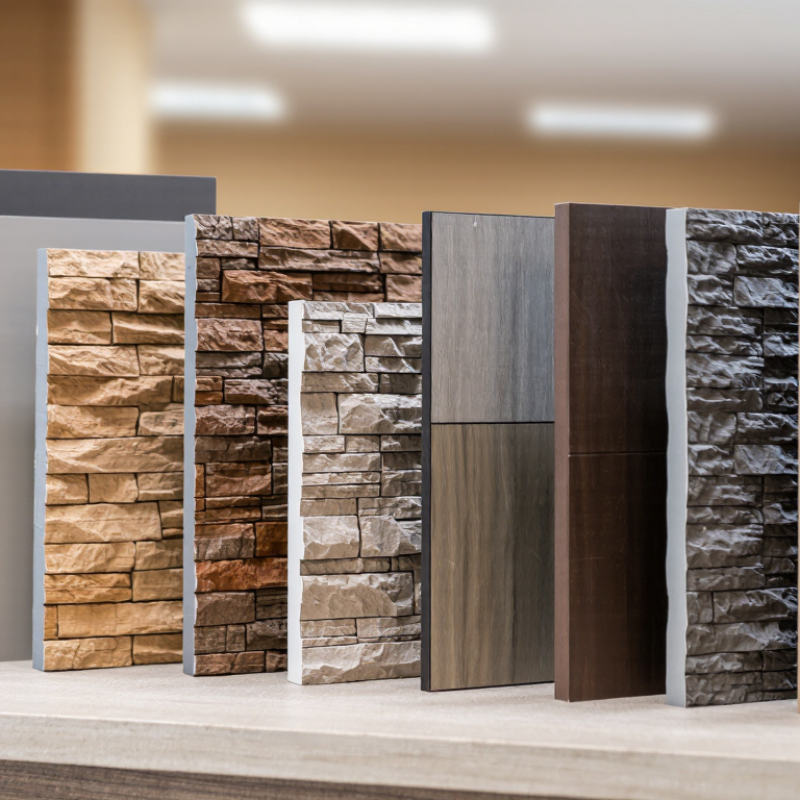
Fake stone wall panels are lightweight coverings shaped to resemble quarried stone, brick, or stacked ledge. They are not all made from the same material. Common options include molded polyurethane, PVC, fiberglass, and cement-based composites, each with different weight, rigidity, and installation needs. A panel’s surface may imitate chipped edges, shallow pits, or rough mortar lines. Look closely at sample pieces; printed color alone rarely gives convincing depth.
Production usually begins with a patterned mold taken from natural stone textures or a designed master surface. Liquid material is poured, injected, or pressed into the mold, depending on the panel type. Pigments may be mixed into the material, or color may be applied in layers after molding. The panel then cures or cools before trimming and inspection. Small variations can make the surface feel less repetitive. Seams still matter. Even a detailed panel can look artificial when patterns repeat across a wall. Check corners, panel thickness, and backing before choosing; product photos do not always reveal how the edges meet in real light.
| Panel type | Main materials | How it is made | Typical strengths | Typical applications and checks |
|---|---|---|---|---|
| 1. Polyurethane (PU) faux-stone panels | Rigid polyurethane foam with a molded or coated surface | Foam is poured or injected into textured molds; color and surface coatings create the stone appearance. | Lightweight and relatively easy to cut; molded relief can include varied stone shapes and joints. | Often used indoors and on some exterior systems. Check UV, moisture, fire, and temperature ratings for the specific product. |
| 2. PVC or vinyl stone-look panels | Rigid or semi-rigid polyvinyl chloride (PVC) | PVC is extruded or molded, then embossed, printed, or laminated with a stone-style finish. | Low maintenance and generally resistant to water; interlocking edges are available on some designs. | Commonly used for interior feature walls and utility spaces. Confirm fire classification, expansion allowance, and outdoor suitability. |
| 3. EPS foam stone-look panels | Expanded polystyrene (EPS) foam, usually with a protective coating | EPS is shaped or molded, then covered with a cementitious, polymer, or other textured finish to resemble stone. | Very light compared with solid masonry; can be formed into large decorative pieces. | Used in decorative wall systems and some exterior assemblies. Check impact resistance, water management, fire requirements, and the full system specification. |
| 4. Fiberglass-reinforced plastic (FRP) panels | Polymer resin reinforced with glass fibers | Resin and glass reinforcement are molded or laminated against a textured surface; color may be integrated or applied as a finish. | Can be made as durable, cleanable sheets with a textured decorative face. | Used in commercial and service interiors as well as selected exterior applications. Verify fire performance, chemical resistance, and UV rating. |
| 5. Cementitious manufactured-stone panels | Cement, mineral aggregates, pigments, and sometimes reinforcing materials | A cement-based mixture is cast or pressed in textured molds; pigments and surface treatments provide color and variation. | Mineral-based appearance and texture; can be made in repeatable panel or modular formats. | Suitable for projects where a masonry-like finish is desired. Check panel weight, fixing method, substrate, and local installation requirements. |
| 6. Lightweight concrete stone panels | Cement binder with lightweight aggregates or other weight-reducing constituents | The mix is cast in molds to form stone-like profiles; the formulation and reinforcement vary by product. | Provides a solid, mineral-based finish while being designed to weigh less than comparable conventional concrete elements. | Used on interior or exterior walls when the product system allows. Confirm actual unit weight, anchoring needs, and exposure limits. |
| 7. Gypsum-based faux-stone panels | Gypsum plaster, with optional fibers, additives, or surface coatings | Gypsum slurry is poured into textured molds, allowed to set, and then dried; color may be added during production or afterward. | Well suited to detailed decorative relief and indoor wall finishes. | Primarily an interior option. Avoid wet or exposed outdoor locations unless the product is specifically rated for those conditions. |
| 8. Resin-and-mineral composite panels | Synthetic resin combined with mineral fillers, pigments, or decorative aggregates | A filled resin mixture is cast, molded, or pressed into a stone-like profile; surface color and texture depend on the formulation. | Can provide consistent shapes and finishes, with properties that can be adjusted through material formulation. | Used for decorative interiors and selected exterior systems. Check resin type, heat and UV resistance, fire rating, and installation method. |
| 9. Ceramic or porcelain stone-look panels | Fired clay-based ceramic or porcelain body with a colored or printed surface | The body is shaped and fired; a glaze, digital print, or other surface treatment creates a stone-inspired pattern. | Hard, non-combustible ceramic surface; porcelain products generally have low water absorption when manufactured to applicable standards. | Used for interior and, where rated, exterior cladding. Check panel format, fixing system, slip or surface characteristics, and relevant standards. |
| 10. High-pressure laminate (HPL) stone-look panels | Decorative paper or printed layers impregnated with resin, bonded to a core under heat and pressure | Layered materials are compressed under heat and pressure; the decorative layer carries the stone-style image or pattern. | Broad choice of printed designs and relatively smooth, easy-to-clean surfaces; some grades are made for demanding environments. | Mostly used as interior decorative cladding, with exterior-grade systems available. Confirm the panel grade, core, edge protection, and intended exposure. |
Note: “Fake stone” describes stone-look products made from manufactured materials; it does not mean every panel has the same performance. Weight, fire classification, weather resistance, fixing requirements, and suitable applications vary by product and installation system. Check current technical data and local building requirements before specifying.