Leave Your Message
Silicone Adhesive Dots can offer businesses a neat, practical way to attach, cushion, or position lightweight components. They are used in packaging, product assembly, displays, and everyday office applications. A clear dot beneath a glass item, for example, can help reduce sliding and protect the surface from direct contact. Small details matter.
For purchasing teams, the appeal is straightforward: dots are easy to apply, require little space, and can support consistent workflows. Silicone’s flexibility may help absorb minor movement or vibration, while the adhesive backing allows convenient placement on suitable surfaces. Still, performance depends on the product design, substrate, temperature, and intended load. One size does not fit every job.
Before choosing a supplier, businesses should compare dimensions, thickness, adhesive type, packaging, and quality-control information. Samples can reveal issues that a product sheet may not show, such as difficult liner removal or poor adhesion on a particular finish. We should be candid here: a dot that works well in one setting may disappoint in another. Testing under real operating conditions is worth the extra step. This guide explores the practical advantages of Silicone Adhesive Dots, what to check before ordering, and how to match them to a business’s specific needs.
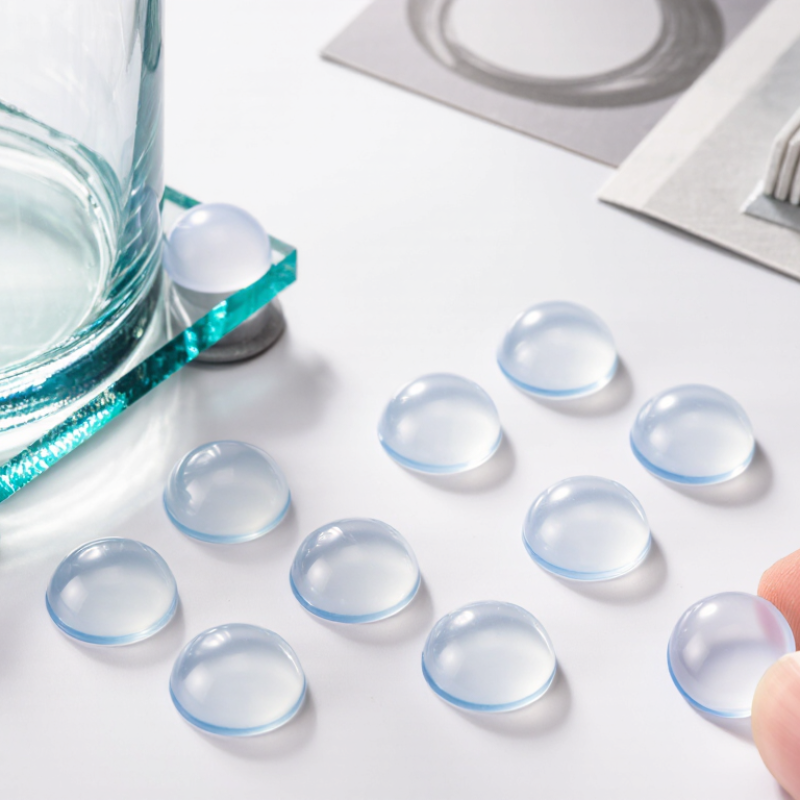
Silicone adhesive dots are small, pre-formed pieces used to cushion, space, grip, or attach lightweight components. Depending on their design, a dot may be a silicone pad with an adhesive backing or a deposit of silicone-based adhesive. Many come on a release liner, so each piece can be placed without handling the sticky surface. Small, but useful.
The adhesive works through contact and pressure. Pressing a dot onto a clean, dry surface helps it make close contact; its tack holds the piece in place. The silicone can also provide a soft, slightly flexible layer between surfaces, helping reduce rattling or slipping. For example, a dot beneath a small display object can add grip and protect the tabletop from direct contact. Results depend on the adhesive, surface material, temperature, and load. Dust, textured finishes, or oily residue can weaken the bond. Test a dot on an inconspicuous area first, and allow any recommended setting time before use. They are not a universal fix; I would avoid relying on them where a failed bond could cause damage.
| Dimension | What It Means | How It Works | Business Consideration |
|---|---|---|---|
| Product definition | Small, pre-formed dots or pads made from silicone or a silicone-based material. Some products also include a separate adhesive layer or backing. | The dot creates a localized contact point between a product and a surface. Construction and performance differ by product design. | Check the product specification to confirm whether the silicone itself is tacky, an adhesive layer is used, or both. |
| Adhesion mechanism | Adhesion may come from a pressure-sensitive adhesive, a tacky silicone surface, or a reusable gel-like surface. | Pressure and close contact help the material conform to small surface irregularities. Adhesive products bond to the substrate; reusable types depend on surface contact and their specified tack. | Do not assume all silicone dots are repositionable or reusable. Confirm the intended removal and reuse method with the supplier. |
| Cushioning and grip | Silicone is an elastomer, so many silicone dots can compress and recover under ordinary use. | A dot can provide a small buffer between contacting parts and may help reduce direct movement or surface-to-surface contact. | Useful for applications such as feet, spacers, or protective contact points, provided the dot’s size and hardness suit the load. |
| Surface compatibility | Performance depends on the dot’s formulation, adhesive system, and the receiving surface. | Clean, dry, smooth surfaces generally provide more consistent contact than dusty, oily, textured, or damp surfaces. | Test on the actual material and finish. Some coatings, plastics, and painted surfaces may need a compatibility check. |
| Temperature and environment | Usable temperature range and resistance to moisture, sunlight, or chemicals are product-specific. | Heat, cold, moisture, chemicals, and prolonged exposure can affect adhesion or material performance. | Use the manufacturer’s technical data for the expected service conditions rather than relying on a general silicone property. |
| Common applications | Small cushioning, spacing, grip, or protective-contact tasks in products and packaging. | Dots can be placed at selected contact points without covering an entire surface. | Consider them for localized needs such as anti-rattle contact, protective feet, or temporary positioning where the product specification supports the use. |
| Selection criteria | Key factors include diameter, thickness, shape, hardness, adhesive type, color, and application method. | These factors determine contact area, compression, fit, appearance, and how the dot attaches. | Match the dot to the load, surface, environment, and removal requirements; evaluate samples before large-scale purchasing. |
| Limitations | A small dot is not automatically suitable for structural bonding, high loads, or every surface. | Insufficient contact area, contamination, incompatible surfaces, or unsuitable environmental conditions can reduce performance. | For safety-critical or load-bearing uses, validate the specific product through testing and follow its technical guidance. |
| Application practice | Correct surface preparation and placement help improve consistency. | Clean and dry the surface, apply the dot as directed, and allow any specified dwell time before use. | Establish a repeatable process and test adhesion, removal, and residue on representative parts. |
| Specification check | Technical details vary across products and manufacturers. | Product data sheets may state material, adhesive type, dimensions, operating limits, and recommended substrates. | Use verified product documentation for purchasing decisions; this table describes general considerations, not guaranteed performance values. |