inquiry
Leave Your Message

How to Choose Non Toxic Silicone Glue in 2026?

Choosing Non Toxic Silicone Glue in 2026 takes more than trusting a reassuring label. The phrase “non-toxic” can mean different things across products, and it does not automatically prove that a glue is safe for every use. Check the manufacturer’s safety data sheet, technical information, and stated applications. Look for clear details about ingredients, curing conditions, ventilation, and any limits on skin or food contact. Small print matters.

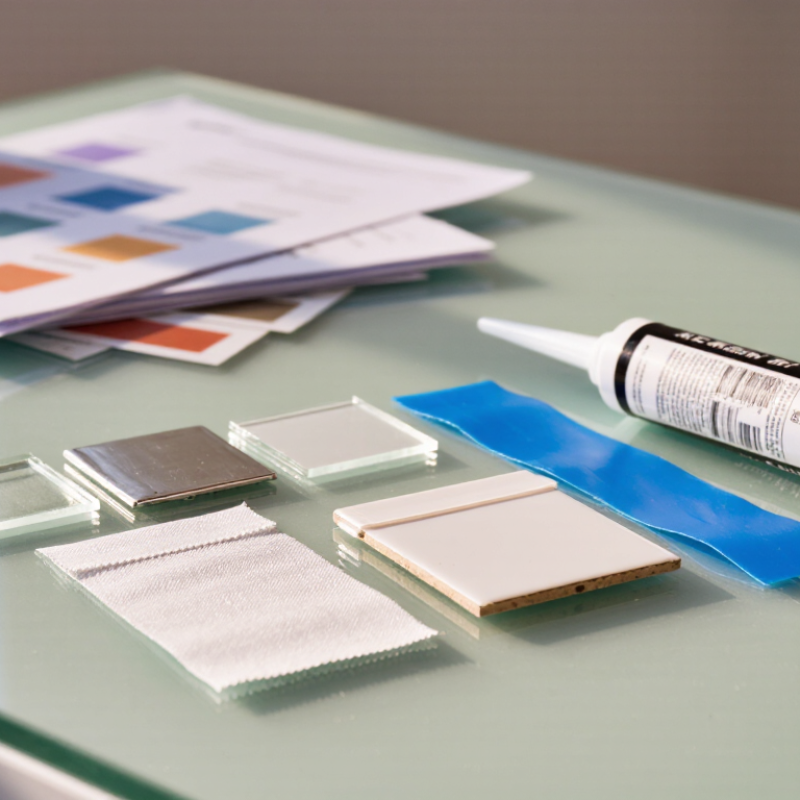
A practical choice starts with the material you need to bond. Is it glass, metal, fabric, or a bathroom tile? Then consider flexibility, water exposure, temperature range, and cure time. A bead that feels dry on the surface may still need more time to cure fully. Follow the product instructions, and test a small, hidden area when compatibility is uncertain. That extra step can prevent a messy repair.

Check that the package identifies the manufacturer and provides traceable product information. Where relevant, review independent test results or recognized certifications, and confirm what they actually cover. A certification may apply to one property, not every possible use. I would not treat any single label as a guarantee. Even a well-documented adhesive can be the wrong fit for a particular project. The sections ahead explain how to compare evidence, performance, and handling details before choosing Non Toxic Silicone Glue.
How to Choose Non Toxic Silicone Glue in 2026?

Define the Use and Exposure: Skin, Food Contact, Aquarium, or Indoor Air

How to Choose Non Toxic Silicone Glue in 2026?

Start with the actual exposure, not the phrase “non-toxic.” Skin contact needs a product intended for that use, with technical documentation on irritation and sensitization. A safety data sheet is useful, but it does not prove that cured glue is safe for prolonged skin contact. Ask for test details, cure conditions, and limits of use. If the seller cannot explain them, pause.

Food contact requires a separate check. In the United States, FDA regulation 21 CFR 177.2600 sets extraction requirements for certain rubber articles used repeatedly with food; it does not approve every silicone adhesive. Look for documentation covering the exact formulation, cure, temperature, and food type. Aquarium use is different again: use products specifically documented for aquariums, and allow the full stated cure time before adding water or animals. “Waterproof” is not enough.

For indoor projects, ventilation and cure emissions matter. The U.S. Environmental Protection Agency’s “The Inside Story: A Guide to Indoor Air Quality” reports that indoor concentrations of some pollutants can be two to five times outdoor levels, and occasionally much higher. That is not a silicone-specific measurement, but it shows why a small room and an open tube deserve care. Check emissions data, ventilate, and follow the cure instructions. I would still want clearer evidence when a label says “safe” without naming the exposure.
How to Choose Non-Toxic Silicone Glue in 2026?

Start by identifying the intended use and exposure route. The chart counts primary routes to assess for the cured product; it is not a toxicity score or a safety certification.

How to use this: For skin, check suitability for the specific type and duration of contact. For food, verify applicable food-contact requirements and intended conditions of use. For aquariums, confirm suitability for continuous immersion after full curing. For indoor use, look for relevant emissions information and follow ventilation and curing instructions. A “non-toxic” claim alone does not establish suitability for any of these uses.

Read the SDS: OSHA HazCom Uses a Standard 16-Section Format

How to Choose Non Toxic Silicone Glue in 2026?

“Non-toxic” is not a guarantee that a silicone adhesive is harmless in every situation. Check its Safety Data Sheet (SDS) before choosing it. Under OSHA HazCom, SDSs use a standard 16-section format, which makes key information easier to locate. Pay close attention to Section 2 for hazards, Section 3 for ingredients, and Section 8 for exposure controls. Section 11 provides toxicological information. The details matter. A product may present different concerns while uncured than after curing, so consider how and where you will use it.

Tips: Check Sections 4, 7, and 10 for first aid, safe handling, and stability information. Look for clear guidance on ventilation, gloves, and storage. OSHA does not enforce the information requirements for Sections 12–15, so do not treat every section as an OSHA-verified finding. An SDS is useful, but it is not a safety certificate.

Compare the SDS with the label and the job at hand. For example, sealing a small indoor joint may call for different precautions than bonding parts in a poorly ventilated workshop. Follow the stated curing time, and avoid assuming that “low odor” means low hazard. If the SDS is missing, hard to read, or vague about exposure controls, ask the supplier for clarification before use. I would not rely on a reassuring product phrase alone; even a careful review can leave questions.

Match Cure Chemistry to the Materials, Ventilation, and Full-Cure Time

Choosing non-toxic silicone glue starts with cure chemistry, not the front-label claim. Acetoxy silicone releases acetic acid as it cures, often producing a vinegar smell; it may corrode copper or react poorly with sensitive stone. Neutral-cure formulas are often better suited to metals and mixed materials, but compatibility still depends on the exact formulation. ASTM C920 evaluates sealant performance, not toxicity, so it cannot prove a product is harmless. Check the safety data sheet and intended-use instructions.

Cure time depends on bead thickness, humidity, and temperature. Technical data sheets for one-part silicone commonly report curing around 2–3 mm per 24 hours under specified conditions, often near 23°C and 50% relative humidity. A thick bead may feel dry outside while remaining uncured inside. Give it more time than the surface suggests. Ventilate the work area during application and curing, following the safety data sheet’s exposure controls; a mild smell is not a reliable safety test.

Match the adhesive to the actual surfaces: glass, painted metal, plastic, or porous tile can behave differently. Test a small hidden area first, especially when bonding coated or delicate materials. I would not treat “low odor” as proof of low exposure. It is an easy assumption to make, and an imperfect one. Check the stated full-cure time before loading, sealing, or placing the bonded item in service.

How to Choose Non Toxic Silicone Glue in 2026? - Match Cure Chemistry to the Materials, Ventilation, and Full-Cure Time
Cure chemistry Typical cure byproduct Material compatibility Ventilation and handling Typical cure timing* When it may be a good fit
Acetoxy-cure RTV Acetic acid; often has a vinegar-like odor during cure. Often bonds well to glass and ceramic. The acidic cure can corrode some metals, including copper and brass, and may be unsuitable for sensitive surfaces or natural stone. Provide good airflow and avoid prolonged exposure to vapors. Follow the product safety data sheet (SDS); do not use the odor alone to judge exposure or safety. A surface skin may form in roughly 10–30 minutes. Through-cure is commonly about 2–3 mm per 24 hours, but varies by formulation and conditions. A possible choice for compatible glass or ceramic jobs where acidic cure byproducts will not affect nearby materials.
Neutral-cure alkoxy RTV Alcohols, which may include methanol or ethanol depending on the formulation. Often selected for metals and other substrates that may be sensitive to acidic cure. Confirm adhesion and compatibility with the specific metal, coating, plastic, or stone. Use ventilation during application and cure, particularly in enclosed spaces. Check the SDS for the actual byproduct and handling precautions. Through-cure is often on the order of 2–3 mm per 24 hours for one-part RTV products; the manufacturer’s instructions take precedence. Consider when an acidic cure is undesirable and the formulation is specified for the substrates and service conditions.
Neutral-cure oxime RTV Oxime compounds, commonly ketoximes; the specific compound depends on the formulation. Can be used on a range of building materials and metals, subject to product-specific compatibility and adhesion testing. Provide good ventilation and review the SDS for the exact cure byproduct. “Neutral cure” does not mean vapor-free or non-toxic. One-part products commonly cure inward at a rate measured in a few millimeters per day; thicker joints take longer. Consider only when the cure chemistry, emissions information, and substrate compatibility meet the project requirements.
Two-part addition-cure silicone Typically no volatile cure byproduct from the addition reaction; check the formulation’s SDS and technical data. Can suit some precision, electrical, or industrial applications. Certain contaminants, including sulfur compounds, amines, and some organotin compounds, may inhibit platinum-catalyzed cure. Ventilation and protective measures are still guided by the SDS. Measure and mix accurately, and avoid skin or eye contact with uncured components. Working and cure times range from minutes to hours; some formulations need additional time to reach specified properties. Follow the stated mix ratio and cure schedule. Consider when controlled mixing and the required cure speed are practical, and compatibility tests show that cure inhibition is not an issue.
Any silicone described as “non-toxic” Depends on the cure chemistry, additives, and whether the material is uncured or fully cured. Do not assume suitability for food contact, drinking-water contact, skin contact, aquariums, or medical use from a general “non-toxic” claim. Check the current SDS, technical data sheet, and any relevant use-specific certification. Follow stated ventilation, PPE, and disposal instructions. Wait for the specified full cure before use. A dry or tack-free surface does not prove that the material has cured through its full thickness. Choose based on documented intended use and exposure limits, not the phrase “non-toxic” by itself.
Selection note: Cure rates are approximate examples, not universal specifications. Temperature, humidity, bead thickness, joint geometry, and airflow can change cure time; one-part RTV silicone generally needs moisture to reach deeper areas. Confirm the required full-cure time and substrate suitability in the product’s current technical data sheet. For critical applications, test a small area first.

Verify Food-Contact Claims: 20 mg/in² Water Extractives in 7 h (21 CFR 177.2600)

How to Choose Non Toxic Silicone Glue in 2026?

A food-contact claim needs more than a reassuring label. Under 21 CFR 177.2600, the water-extractives limit for covered rubber articles is 20 mg per square inch during the first seven hours. That figure is a test limit, not proof that every silicone adhesive is suitable for food contact. The rule also addresses repeated-use articles and specified extraction conditions. Ask whether the tested sample was the fully cured adhesive, not just its uncured ingredients. Small details matter.

Check the test report for the exact product, cure time, surface area, and extraction method. Compare these with your intended use, such as a seal near a warm beverage or a gasket washed often. A result below the limit is useful evidence, but it does not answer every safety question. I would not rely on a generic “food safe” statement alone. Even a clean-looking bead can hide incomplete curing.

Tips: Request the report and confirm the 20 mg/in² result applies to the first seven-hour water extraction. Follow the stated cure time, ventilate during application, and keep uncured adhesive away from food-contact surfaces. If the seller cannot explain what was tested, pause and verify. That extra step can feel tedious. It is still worth it.

Check Biocompatibility: ISO 10993-5 Flags >30% Cell-Viability Loss

When choosing non-toxic silicone glue in 2026, treat biocompatibility data as more than a checkbox. ISO 10993-5 evaluates whether a material harms cells in laboratory tests. In common interpretation, a reduction in cell viability greater than 30%—leaving less than 70% viability compared with the control—signals a cytotoxic concern. It is a warning, not a complete verdict on every use.

Ask for results on the fully cured adhesive, not just its uncured ingredients. Cure time, temperature, thickness, and ventilation can change what remains in the material. A thin bead on a test dish may behave differently from a thick seal in an assembled product. Check that the tested formulation matches the one you plan to use, including its colorants or fillers. Small differences matter.

Look for a report that names the test method, controls, sample preparation, and cell-viability results. A vague statement such as “biocompatible” is hard to assess. Not enough detail. Also consider the intended contact, since a screening test alone cannot establish suitability for every application. If viability drops by more than 30%, pause and ask what caused the result, whether testing can be clarified, and whether another formulation is appropriate. Even a clean report leaves questions; that is worth acknowledging.